The Supplement Guide for Hair Loss That's Actually Honest
Hair loss content falls into two categories: 'this miracle supplement regrows everything' and 'nothing works, see a dermatologist.' The truth is between them. Some supplements have evidence for specific types of hair loss — nutritional deficiency and stress-induced shedding respond well. Pattern hair loss requires medical intervention. None of them are miracle cures. Here's the honest version, with the type-specific framework that determines whether supplementation is the right tool.


Before spending money on supplements, you need to know which type of hair loss you're dealing with. Androgenetic alopecia (pattern loss) is DHT-driven follicle miniaturization — genetic, progressive, and the most common type. Supplements play a supporting role but won't reverse advanced pattern loss; that requires minoxidil, finasteride, or procedural options. Telogen effluvium is stress-induced shedding — a physiological stressor pushes follicles from growth phase to resting phase simultaneously, with shedding appearing 2–3 months after the trigger. This type is most responsive to supplementation because the follicles aren't damaged; they're dormant. Nutritional deficiency (iron, zinc, vitamin D, biotin, protein) causes thinning that resolves when the deficiency is corrected.
The honest framework: supplements work best for nutritional deficiency and telogen effluvium. They support but don't replace medical treatment for pattern loss. If you're seeing significant scalp visibility, consult a dermatologist before or alongside supplementation.
Biotin + Keratin + MSM — The Structural Protein Chain
Biotin (vitamin B7) is the most-searched hair supplement, and the evidence is more nuanced than the marketing suggests. True biotin deficiency absolutely causes hair loss, and supplementation in deficient individuals restores growth. But frank biotin deficiency is relatively uncommon in people eating a varied diet. Where biotin supplementation has stronger evidence is at higher doses (2,500–5,000mcg) in populations with suboptimal biotin status — which is more common than clinical deficiency. Pregnancy, alcohol consumption, certain medications (valproic acid, isotretinoin), and genetic polymorphisms in biotinidase can all reduce functional biotin availability without triggering diagnosable deficiency.
Keratin is the structural protein that hair shafts are literally composed of. Supplemental keratin (Cynatine HNS — a solubilized, bioavailable form) has clinical trial support for reduced hair shedding and increased hair strand strength. MSM (methylsulfonylmethane) provides the sulfur atoms that form the disulfide bonds cross-linking keratin fibers — the bonds that give hair its tensile strength and resilience. More sulfur availability means stronger, more resistant strands that break less during normal mechanical stress (brushing, styling, wind).
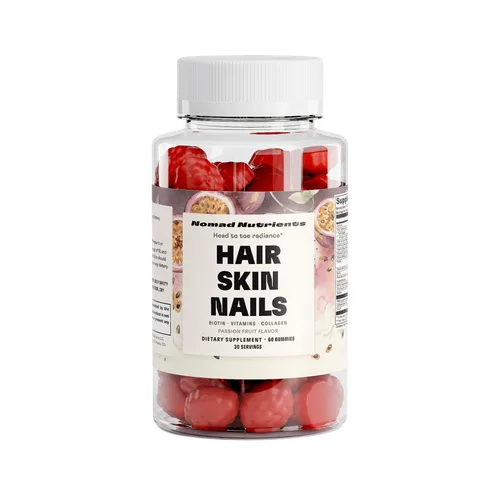
Hair, skin, and nails gummies combine biotin, keratin (Cynatine HNS), and MSM in a single daily dose. The gummy format supports compliance — the single biggest determinant of whether a supplement protocol produces results. The capsule format (hair, skin, and nails capsules) provides higher concentrations for people who want stronger dosing or prefer capsules. Biotin effects on growth rate typically appear at 8–12 weeks. Keratin strength effects can be measurable earlier (4–8 weeks for reduced breakage). MSM effects on strand resilience are cumulative.
Collagen Peptides — Dermal Papilla Environment
Hair grows from the dermal papilla — a structure embedded in the dermis at the base of each follicle. The dermal papilla's health depends on the collagen-rich extracellular matrix surrounding it: blood supply, growth factor signaling, and structural support all flow through this matrix. As dermal collagen declines with age (roughly 1–1.5% per year from your mid-20s), the follicle environment deteriorates. The follicle doesn't die — its support structure thins.
Hydroxyproline-containing collagen peptides (Pro-Hyp, Hyp-Gly) accumulate in the dermis after oral ingestion and signal fibroblasts to increase collagen production. While direct clinical evidence specifically for collagen → hair is still developing, the mechanism is well-established: healthier dermal matrix → healthier follicle environment → better conditions for growth. Collagen also provides proline and glycine — two amino acids that are direct building blocks for keratin synthesis. Most modern diets don't provide enough of either.
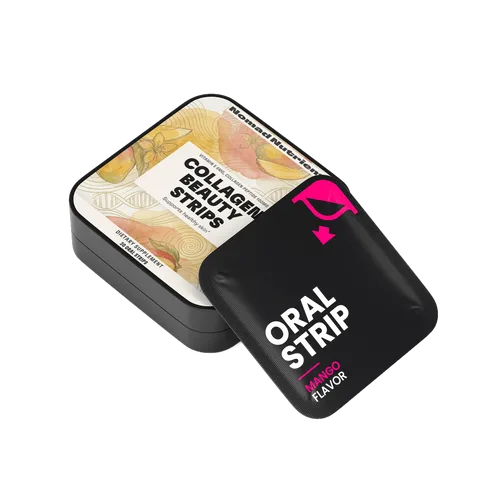
Collagen boost strips deliver hydrolyzed collagen peptides sublingually, bypassing GI variability and reaching the dermis through systemic circulation. The sublingual format means no food-timing requirements and faster peak blood levels than powder or capsule delivery. Dermal remodeling is slow — expect 12–24 weeks for meaningful change in the follicle environment. This is a long-game intervention that compounds with the keratin/biotin/MSM from the structural protein layer. Collagen addresses the matrix; keratin/biotin/MSM addresses the strand itself.
Don't shop alone. Build with Myco.
Tell Myco your goals. He'll pull the three compounds that fit your life and time-zone — locked-in founding pricing.
Zinc + Selenium + Trace Minerals — The Cofactor Layer
Zinc deficiency is one of the most common and most underdiagnosed nutritional causes of hair loss. Zinc is required for DNA synthesis in the rapidly dividing cells of the hair follicle matrix — the zone where new hair cells are produced at a rate of approximately 0.35mm per day. It's also a cofactor for over 300 enzymatic reactions, including several directly involved in keratin assembly and disulfide bond formation.
Selenium is required for selenoprotein production — specifically glutathione peroxidase, which protects the hair follicle from oxidative damage by reactive oxygen species. Selenium deficiency is associated with hair depigmentation and loss. But selenium has a narrow therapeutic window: excess selenium is toxic to hair follicles (selenosis causes hair loss). This is why food-sourced selenium in ionic, bioavailable form is preferable to high-dose isolated selenium tablets — the natural matrix provides self-limiting absorption.
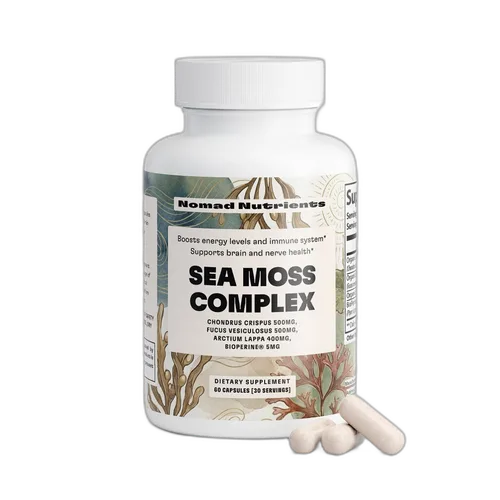
Sea moss blend provides zinc, selenium, silica, and 89+ additional trace minerals in ionic form from wildcrafted sea moss. The whole-food mineral matrix delivers these cofactors in balanced ratios rather than isolated high-dose forms that can create secondary imbalances. Isolated zinc supplementation above 40mg daily depletes copper through competitive absorption at DMT1 transporters — the whole-food matrix avoids this. If zinc deficiency is contributing to hair loss, correction typically produces visible results in 8–12 weeks — one full hair growth cycle.
Ashwagandha — Cortisol-Driven Telogen Effluvium
Telogen effluvium — stress-triggered mass shedding — is directly caused by chronic cortisol elevation. Cortisol pushes hair follicles from the anagen (growth) phase into the telogen (resting) phase prematurely through catagen induction signaling. The shedding appears 2–3 months after the stress event, which is why people often can't connect the trigger to the loss. You lose your job in January; you notice hair falling out in March. The connection isn't obvious.
Ashwagandha addresses this at the root cause. RCTs show 28% cortisol reduction over 8 weeks with KSM-66 extract. By normalizing HPA axis function, ashwagandha removes the hormonal signal that's prematurely retiring follicles from the growth phase. This is the most mechanistically targeted supplement intervention for stress-related hair loss — it doesn't strengthen the hair or feed the follicle, it removes the signal that's shutting follicles down.
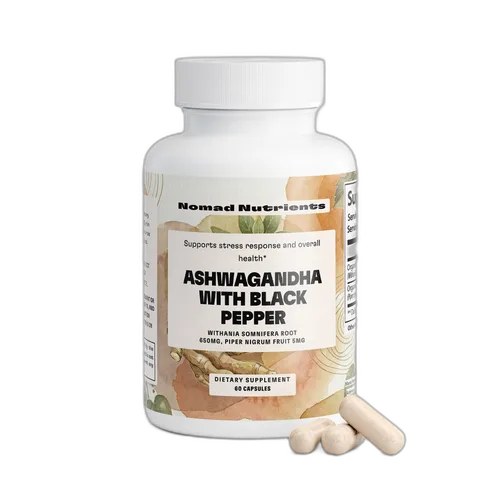
Ashwagandha with black pepper — piperine increases withanolide bioavailability through UGT enzyme inhibition. Evening dosing supports the cortisol reduction → sleep improvement cascade. Cortisol reduction begins within 2–4 weeks of daily use. Hair follicle recovery from telogen effluvium takes 3–6 months — follicles must complete their resting phase and re-enter the growth phase naturally. There's no way to speed this biological timeline. But removing the cortisol signal that caused the shift allows the cycle to resume normally.
What Supplements Won't Do (The Boundaries That Matter)
Supplements won't regrow hair from fully miniaturized follicles. In advanced androgenetic alopecia, the follicle has structurally changed — it produces vellus hair (peach fuzz) instead of terminal hair. Nutritional supplementation cannot reverse that structural miniaturization. Medical interventions (minoxidil for blood flow, finasteride for DHT blockade, PRP for growth factor stimulation, transplantation for follicle redistribution) address this through different mechanisms.
Supplements won't work overnight. Hair grows approximately 0.5 inches per month. Any intervention — medical or nutritional — needs 3–6 months minimum to produce visible results. Products claiming faster timelines are misleading you. Supplements won't overcome an underlying medical condition: thyroid dysfunction, autoimmune alopecia areata, PCOS, and chronic illness all cause hair loss through mechanisms requiring medical diagnosis and treatment. Supplements support but don't replace that process.
The beauty stack bundles the complementary compounds — collagen, keratin/biotin, and internal support — at a 25% discount. Start with the type of hair loss that matches your pattern: if it correlates with stress, start with ashwagandha. If it correlates with dietary gaps, start with zinc/mineral support. If it's generalized thinning with no obvious trigger, the structural protein chain (biotin + keratin + collagen) addresses the broadest range of nutritional contributors. Give any protocol 3–6 months before evaluating — one full growth cycle minimum.
Biotin and vitamins + 20 g collagen peptides + night repair = Both sides of the barrier


The realistic timeline: month 1, nutritional foundations establishing, no visible change yet. Month 2–3, reduced shedding if the cause was nutritional or stress-related. Month 3–4, early new growth visible. Month 4–6, measurable improvement in density and thickness. Month 6–12, continued improvement as collagen-mediated dermal remodeling progresses.
The honest truth about hair supplements: they work for specific types of loss, within realistic timelines, as part of a broader approach. They're not a substitute for medical treatment when medical treatment is indicated. But for nutritional gaps, stress-mediated shedding, and age-related thinning, the evidence supports a meaningful difference — if you give it enough time.
Key Ingredients

Vitamin C
Ascorbic Acid

Vitamin E
DL-alpha-Tocopherol

Collagen Peptide
Hydrolyzed Collagen

Irish Moss
Chondrus crispus
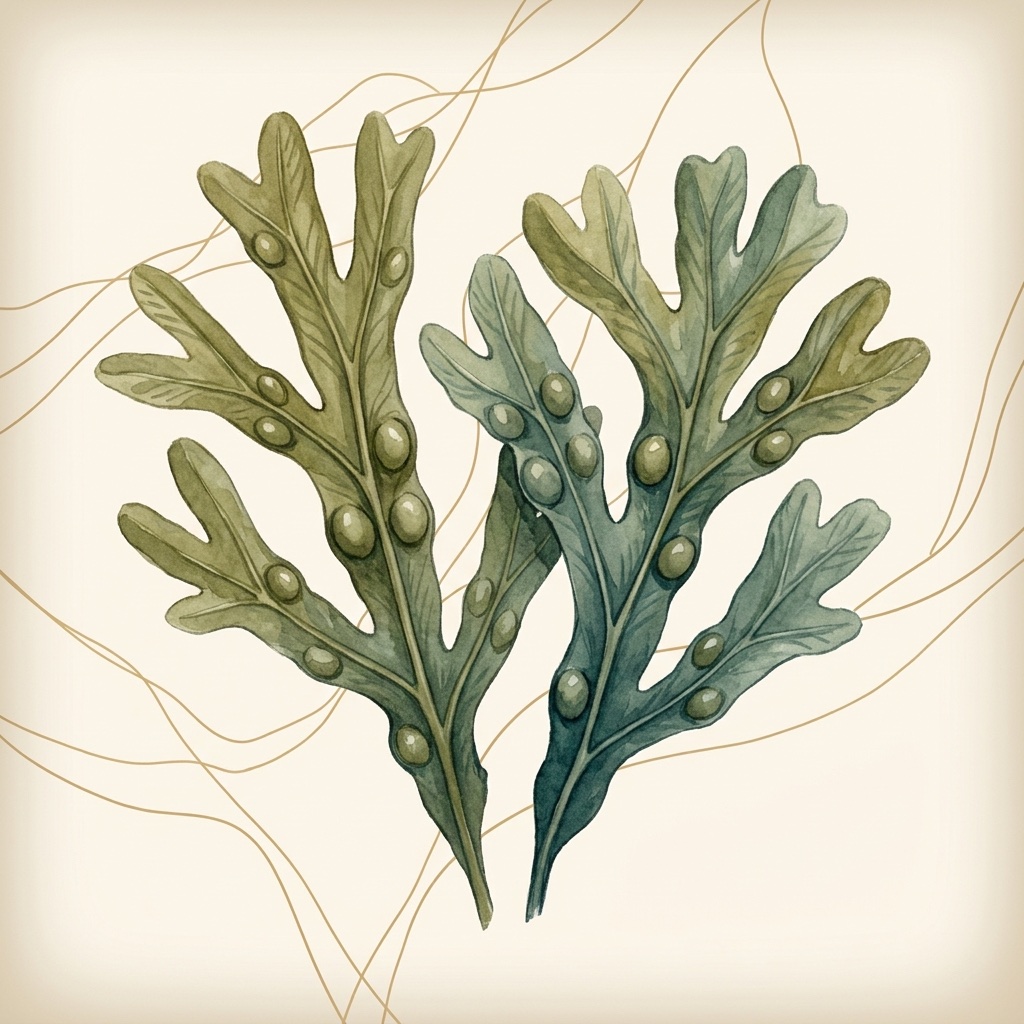
Bladderwrack
Fucus vesiculosus

Burdock Root
Arctium lappa

Ashwagandha
Withania somnifera

Black Pepper
Piper nigrum
Three products. One protocol.
Pick 3. Save 25%. Free shipping every order. Myco cycles compounds monthly so your body never plateaus — and you never run out.
I built Nomad Nutrients because the supplement aisle is broken. Timing, dosing, and stack design matter more than the latest hero ingredient. We get the boring stuff right so you don't have to.
Build a stack from this article
$70.27$93.70
Comments
Leave a Comment
Keep reading.
Why Your Collagen Routine Still Isn't Working
Collagen rebuilds skin's protein matrix. It doesn't touch hair or nails, and it doesn't work without the minerals that hold it together. Here's the 3-layer system that actually covers all three.
The Complete Collagen Guide: Types, Formats, Timing, and Whether It Actually Works
Collagen is the most abundant protein in your body and the most searched supplement category after protein powder. When you ingest hydrolyzed collagen, you're not depositing intact molecules into your skin — the molecule is far too large. What happens is more interesting: specific peptide fragments survive digestion, accumulate in the dermis, and serve as signaling molecules that upregulate your body's own collagen production. This guide maps the mechanism, evaluates the evidence, and explains why format and timing determine whether supplementation works or wastes your money.
When to Take Every Supplement (The Complete Timing Guide)
Your body absorbs, metabolizes, and responds to nutrients differently depending on when you take them. Fat-soluble compounds taken without fat pass through you. Stimulatory adaptogens taken at night keep you up. Minerals taken together compete for the same transporters. This is the complete timing protocol — organized by window, with the pharmacokinetic reasoning behind every recommendation.
A Science-Backed Skincare Routine (Inside and Out)
Most skincare routines stop at the epidermis — the outermost 0.1mm of your skin. They ignore the dermis beneath it, where collagen, elastin, and hyaluronic acid are actually synthesized. No topical product reaches the dermis in meaningful concentrations. This layer responds to systemic inputs. A complete routine works both sides: topical actives on the surface, systemic compounds from within.
5 Supplements for Dads and Dads-to-Be
Nobody tells you that becoming a dad is a physiological event — not just an emotional one. Your sleep architecture collapses. Your cortisol stays elevated for months. Your immune system gets stress-tested by every daycare pathogen your kid brings home. And if you're not a dad yet but trying to be, your sperm quality is shaped by the same compounds that will keep you functional after the baby arrives. Five supplements that serve both sides of the transition.
5 Hormonal Shifts Women Navigate That Most Supplements Ignore
Cyclical energy, libido decline, hair thinning, cortisol-progesterone competition, and the beauty stack gap — five hormonal realities that generic supplements weren't designed for.
Shop the products.
Four products. Earned their place in every stack.
These float to the top of nearly every Smart Stack — broad pathway coverage, strong evidence, real doses. Curated by Myco, rotated when something better comes along.
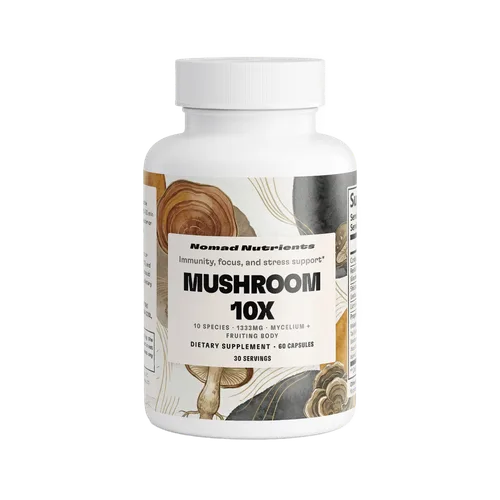
Mushroom 10X
Ten species in one capsule — the whole-spectrum support for immunity, focus, and energy.
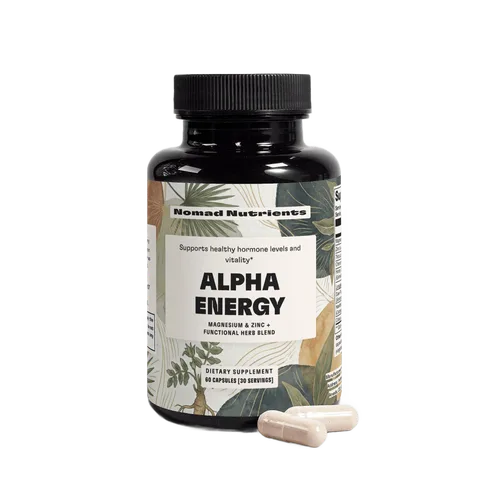
Alpha Energy
Testosterone. Energy. Drive. — Zinc, magnesium, and Tongkat Ali for natural vitality and peak performance.
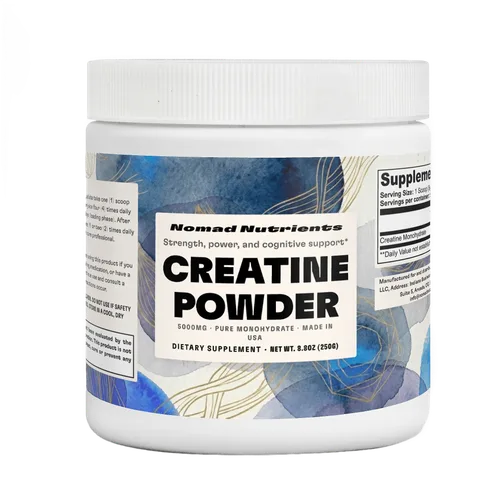
Creatine Powder
The most-studied compound on earth. 5g pure — for stronger muscle and sharper thinking.
Ashwagandha
Cortisol control, calm focus, and deep recovery — the adaptogen that earns its place in every stack.
Founder’s Story
"Hi, I'm Tanner. I built Nomad for optimizers who want a real system — not just a subscription. You choose the direction, we handle the navigation. Pick your path and we'll route you there."
— Tanner
Chief Mushroom Officer