
8 min read · Filed under: Foundations, Skin Health, Longevity
Collagen is a family of 28 identified types of structural protein, each with a different tissue distribution and function. When supplement brands say "collagen," they almost always mean Types I and III — the two types that dominate skin, tendons, bones, and blood vessels. Type I alone accounts for roughly 90% of the collagen in your body: dense, load-bearing fibrils in skin, bone, tendons, and the cornea. Type III is the soft-tissue collagen — blood vessels, organs, and the reticular fibers that give skin its elasticity.
The important distinction: when you ingest collagen, you're not absorbing intact collagen molecules and depositing them into your skin. The molecule is far too large. What happens is more interesting.
The Mechanism: How Ingested Collagen Reaches Your Dermis
Hydrolyzed collagen (collagen peptides) are pre-broken into fragments of 2–5 amino acids. These di- and tripeptides — particularly hydroxyproline-containing peptides like Pro-Hyp and Hyp-Gly — survive digestion largely intact. This is unusual: most dietary proteins are broken down into individual amino acids before absorption. Collagen peptides are absorbed through PepT1 transporters in the small intestine, enter the bloodstream, and accumulate in the skin. Studies using radiolabeled hydroxyproline have tracked this migration directly — collagen peptides reach the dermis within hours of oral ingestion.
Once there, they serve dual functions. First, they provide raw material for fibroblasts to synthesize new collagen. Second — and this is the more important mechanism — hydroxyproline-containing peptides act as signaling molecules. They bind to fibroblast receptors and upregulate collagen synthesis, hyaluronic acid production, and elastin assembly. Your body interprets the presence of collagen fragments as a signal that collagen turnover is happening, and it responds by increasing production.
This is why hydrolyzed collagen works differently than simply eating protein. The specific peptide fragments serve a signaling function that generic amino acids don't.
The Evidence — Honest Assessment
Multiple randomized controlled trials have demonstrated measurable improvements in skin hydration, elasticity, and wrinkle depth after 4–12 weeks of collagen peptide supplementation at 2.5–10g daily. A 2019 meta-analysis pooling 11 studies found that collagen supplementation significantly improved skin hydration and elasticity compared to placebo, with effects emerging around the 8-week mark.
For hair, the evidence is less direct but mechanistically plausible. Collagen provides proline and glycine — amino acids critical for keratin synthesis. Hydroxyproline signaling at the dermal papilla (the base of the hair follicle) may support follicle health. Clinical data specifically for hair is thinner than for skin, but the overlap in dermal biology suggests skin benefits likely extend to the follicle environment.
For nails, a 2017 study showed 12% increased nail growth rate and 42% reduction in broken nails after 24 weeks of collagen supplementation.
The skeptics are right that many collagen studies are industry-funded and relatively small. They're wrong that the mechanism is implausible — the hydroxyproline signaling pathway is well-characterized, and the peptide absorption evidence is strong.
Types and What They Mean for You
Type I/III — this is what most people want. Bovine-sourced collagen is predominantly Types I and III. Marine collagen is predominantly Type I. Both work. Marine has smaller peptide fragments (lower molecular weight), which may improve PepT1 transporter uptake slightly. Bovine is more abundant and less expensive per gram.
Type II — derived from chicken sternum cartilage. Supports joint health through a different mechanism: immune modulation of the inflammatory response in joint tissue via oral tolerance induction. Specifically, undenatured Type II (UC-II) at low doses (40mg) trains the immune system to reduce its attack on joint cartilage. This is a separate intervention from the Type I/III skin and hair protocol.
Format Determines Pharmacokinetics
The format you choose changes how collagen enters your system — and that changes how you need to time it.
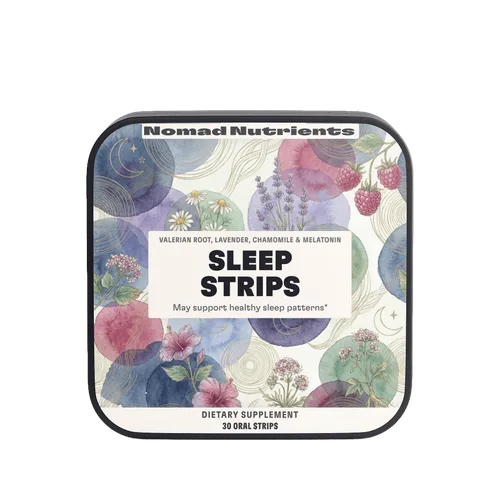
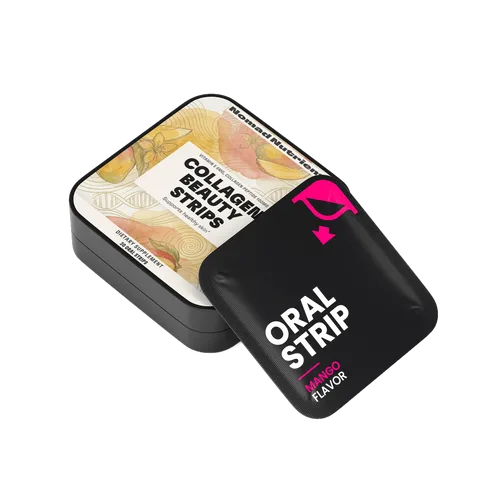
Sublingual strips absorb through the oral mucosa directly into the bloodstream, bypassing the GI tract entirely. No digestive breakdown variability. No need to time around meals. Fastest peak blood levels. The collagen boost strips use this delivery route — they're the most pharmacokinetically flexible format because the absorption pathway doesn't interact with food, gastric pH, or intestinal peptidases.
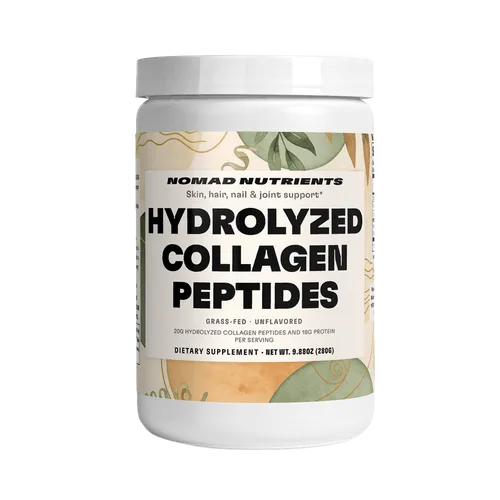
Hydrolyzed powder is the workhorse format. The grass-fed hydrolyzed collagen peptides dissolve completely in hot or cold liquid with no taste. Serving size is 10–20g, delivering the highest absolute dose per serving. The grass-fed collagen peptides in chocolate flavor add palatability for smoothie and shake routines. The collagen creamer in vanilla combines peptides with MCT oil in a coffee creamer format — building collagen into a daily coffee habit with the added benefit of MCT-mediated fat delivery for any co-ingested fat-soluble nutrients.
Practical format decision: sublingual strips for convenience, flexibility, and signaling-peptide delivery. Powder for maximum daily dose and kitchen versatility. Creamer for people whose most consistent daily habit is coffee.
Timing and Dosing
Dose: 2.5–10g daily for skin benefits based on clinical trial dosing. Higher doses (15–20g) appear in athletic recovery protocols but aren't necessary for dermal outcomes.
Timing: On an empty stomach when possible. Collagen peptides absorb better without competing amino acids from other proteins. First thing in the morning (30 minutes before breakfast) or before bed are the two lowest-competition windows. Sublingual strips are timing-agnostic.
Duration: Effects are cumulative. Most clinical trials show measurable changes at 8 weeks, with continued improvement through 12–24 weeks. Collagen synthesis is slow — your body needs time to upregulate fibroblast activity and turn over existing tissue. This is not a supplement that produces overnight results.
Vitamin C: Required cofactor for collagen synthesis — it activates prolyl hydroxylase, the enzyme that hydroxylates proline into hydroxyproline. If you're supplementing collagen, ensure adequate vitamin C intake. 100–200mg from food or a multivitamin is sufficient; megadoses don't help.
The Complementary Protein Layer
Collagen supports the dermal matrix — the structural foundation beneath the skin surface. But the visible surface layer (epidermis) is built from keratin, a different structural protein. Collagen and keratin serve different structural roles: collagen provides tensile strength and elasticity in the dermis; keratin provides hardness and protection in the epidermis, hair shafts, and nail plates.
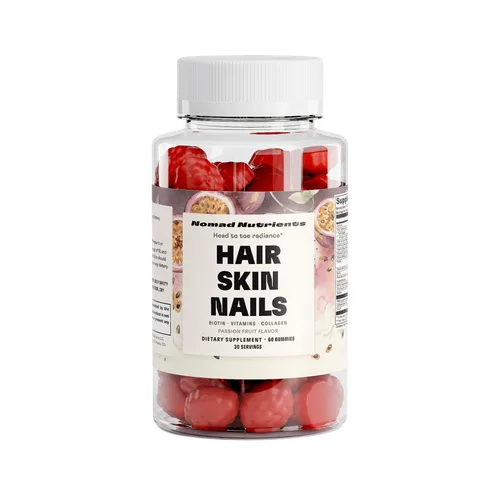
Hair, skin, and nails gummies combine biotin (vitamin B7, a cofactor for keratin synthesis), Cynatine HNS keratin (soluble keratin with clinical trial support for reduced hair shedding), and MSM (methylsulfonylmethane, providing sulfur for the disulfide bonds that cross-link keratin fibers). This addresses the keratin layer that collagen supports but doesn't replace.
The stack approach: collagen peptides for the dermal matrix (below the surface) plus keratin/biotin/MSM for the epidermal and structural protein layer (the surface you see). They're complementary, not redundant.
Who Should and Shouldn't Bother
Strong case: people over 30 (collagen synthesis declines roughly 1–1.5% per year starting in your mid-20s), anyone with visible skin aging concerns, people recovering from joint injuries or surgery, athletes with high connective tissue demands, anyone with brittle nails or thinning hair alongside skin concerns.
Don't bother if: you won't take it consistently. Collagen works through cumulative tissue remodeling over months. Sporadic use doesn't build the sustained fibroblast signaling that drives upregulation. The variable isn't whether collagen works — it's whether you'll take it consistently enough, in the right format, for long enough to see results.