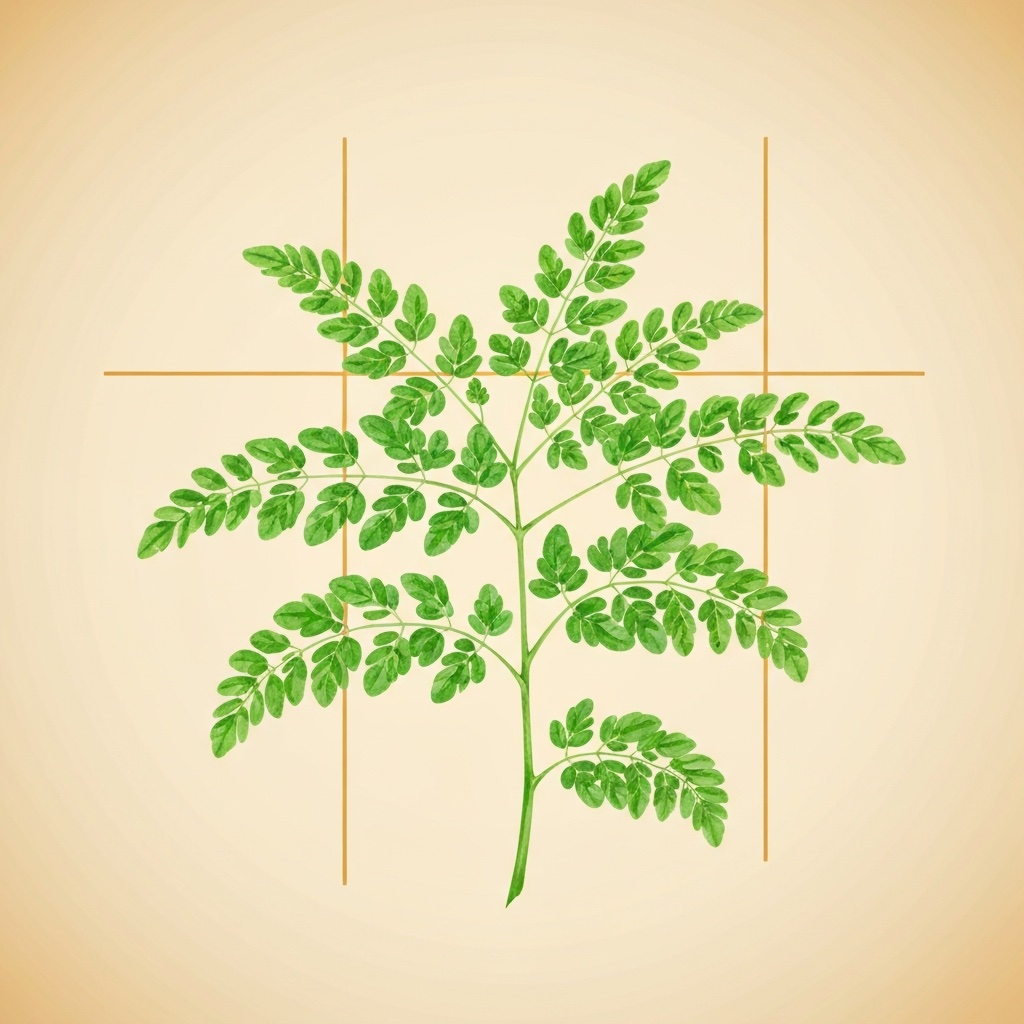
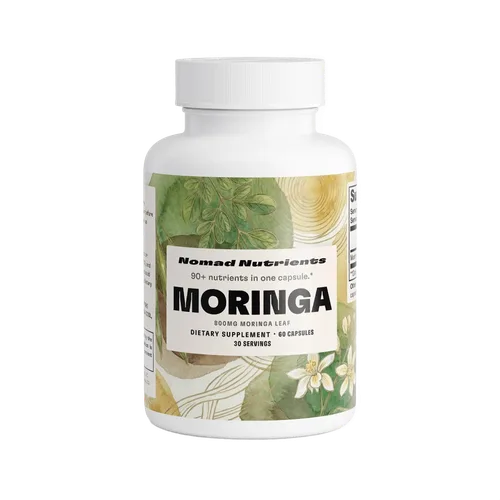
Moringa leaf powder's nutritional profile per gram is among the most concentrated of any whole food, across multiple nutrient categories simultaneously. This is the relevant comparison — not absolute quantities (which are dose-dependent) but density per gram, since that's what determines how much nutritional work a serving is doing.
Protein: Moringa leaf powder contains approximately 25–30% protein by dry weight — comparable to legumes, and unusually high for a leaf. More importantly, the protein contains all nine essential amino acids, making it a complete protein source — rare among plant foods. The amino acid profile is particularly notable for its lysine content, an essential amino acid commonly limiting in plant-based diets.
Vitamin C: Gram-for-gram, dried moringa leaf contains approximately 7x the vitamin C of oranges. The caveat: vitamin C is heat-sensitive and degrades during drying. The actual vitamin C content of a commercial moringa powder depends heavily on the drying method — low-temperature (shade or freeze) drying preserves significantly more than high-heat processing.
Calcium: Approximately 4x the calcium density of whole milk per gram. Bioavailability of plant calcium varies depending on oxalate content (which can bind calcium and reduce absorption) — moringa's oxalate levels are moderate and not high enough to negate its calcium contribution, but absorption is somewhat lower than dairy calcium.
Iron: Significantly higher iron density than spinach per gram, though again, non-heme iron from plant sources has lower bioavailability than heme iron from animal sources. Vitamin C consumed alongside moringa enhances non-heme iron absorption — a useful pairing given moringa's own vitamin C content (before heat degradation) or a separate vitamin C source.
Potassium: Approximately 3x the potassium density of bananas per gram.
B vitamins: Meaningful concentrations of B2 (riboflavin), B3 (niacin), B6, and folate.
The honest read on these comparisons: they're accurate on a per-gram basis and the nutrient density is genuinely high. The practical qualification is that standard serving sizes for moringa powder (typically 3–10g) mean the absolute nutrient contribution is meaningful as a daily supplement but not equivalent to eating the foods compared. Moringa is a dense nutritional complement, not a replacement for a varied diet.