The Men's Supplement Stack After 40: What Actually Changes and What to Do About It
Something shifts in your 40s. Recovery takes longer, energy plateaus earlier in the day, and the things that used to take care of themselves quietly stop doing so. Several biological systems that were silently declining since your late 20s reach a threshold where you feel it. Here are the six compounds with evidence to address what's actually changing — in order of priority.

The 40s aren't a cliff — they're an inflection point. Phosphocreatine regeneration slows. Mitochondrial efficiency drops. Testosterone doesn't crash (that's a myth the TRT clinics sell), but free testosterone declines as SHBG rises. Cardiovascular risk markers that were invisible at 30 start appearing on bloodwork at 42.
None of this is inevitable in the sense that it can't be addressed. But it does mean the "I don't take anything" approach has a cost that compounds year over year. Here are the six evidence-backed interventions, in order of priority.
Creatine Monohydrate — Phosphocreatine Decline Accelerates
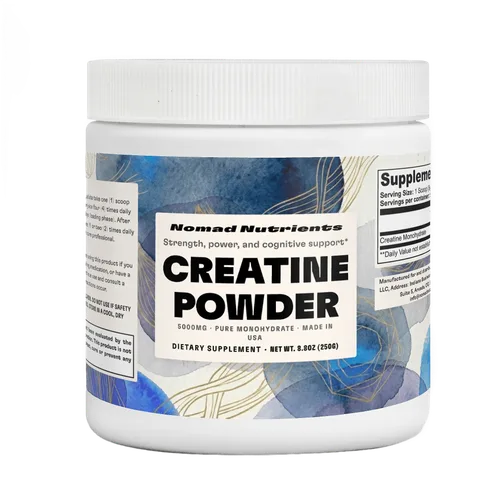
Creatine isn't a bodybuilding supplement — that's a branding problem from the 1990s. It's the most studied ergogenic compound in existence, and its benefits extend well beyond muscle. Phosphocreatine is your body's fastest energy currency: it regenerates ATP in seconds, faster than glycolysis, faster than oxidative phosphorylation. Every explosive movement, every intense cognitive effort, every recovery cycle between sets or between meetings depends on phosphocreatine availability.
After 40, endogenous creatine synthesis declines. Dietary intake from red meat and fish typically doesn't compensate. The result is slower recovery, reduced power output, and — increasingly recognized in the literature — reduced cognitive reserve under stress. The evidence for creatine supplementation is so strong that it's one of the few supplements with near-universal endorsement from sports medicine organizations. At 3–5g daily, it restores tissue saturation regardless of age.
Creatine monohydrate at 5g daily, any time. Monohydrate is the form used in virtually all positive clinical trials. Other forms (HCl, ethyl ester, buffered) have marketing advantages but no research advantages. No loading phase is necessary — loading speeds saturation by a few days but isn't required. Results are cumulative over 2–4 weeks as muscle and brain creatine stores fill. This is the single highest-impact, lowest-risk supplement for men over 40.
Omega-3 (EPA/DHA) — Cardiovascular Risk Enters a New Bracket
The decade between 40 and 50 is when atherosclerotic plaque burden typically crosses the threshold from subclinical to clinically relevant. C-reactive protein trends upward. Triglycerides climb. The arterial compliance you never thought about starts mattering. EPA and DHA address multiple cardiovascular risk factors simultaneously through distinct mechanisms. EPA reduces triglycerides through PPAR-α activation and reduced hepatic VLDL secretion. DHA incorporates into cell membranes and improves arterial compliance. Both synthesize resolvins and protectins — specialized pro-resolving mediators that actively resolve inflammation rather than just suppressing it.
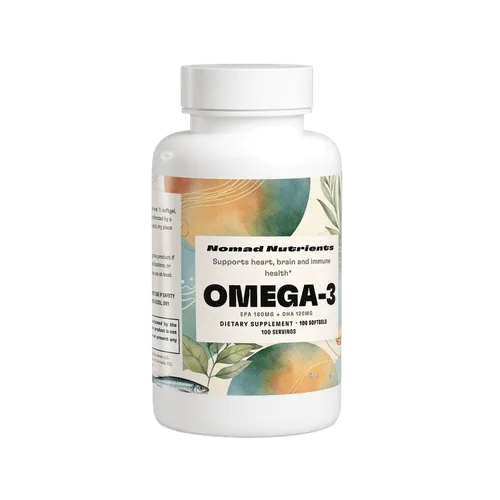
The dose matters more than the brand. Most cardiovascular trials showing benefit used 1–2g combined EPA/DHA daily. A single capsule of most consumer fish oils provides 300mg. You need 3–6 capsules daily to reach therapeutic range — the single-capsule marketing is convenient but subtherapeutic.
Omega-3 with EPA 180mg and DHA 120mg per capsule — take 3–6 capsules with your fattiest meal. Absorption increases up to 300% when co-ingested with dietary fat due to bile-salt-mediated micelle formation. If you're only going to take one cardiovascular-focused supplement after 40, this is the one with the deepest evidence base across the broadest range of risk markers.
Don't shop alone. Build with Myco.
Tell Myco your priorities. He'll pull the three compounds that fit your goals and time-zone of life — locked-in founding pricing.
CoQ10 (Ubiquinone) — Mitochondrial Electron Transport Is Bottlenecked
CoQ10 is the electron shuttle between Complex I/II and Complex III in the mitochondrial electron transport chain. Without adequate CoQ10, electrons leak, reactive oxygen species increase, and ATP production drops. Your mitochondria are still there — they're running at reduced capacity. Tissue CoQ10 levels peak around age 25 and decline steadily. By 50, heart tissue CoQ10 may be 40% below peak levels.
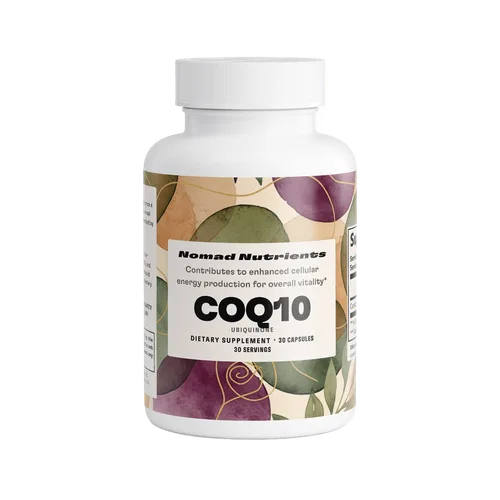
If you're on a statin — and many men over 40 are — the decline is accelerated. Statins inhibit HMG-CoA reductase, which sits on the same mevalonate pathway as CoQ10 synthesis. This is why statin users frequently report fatigue and muscle pain. It's not necessarily a direct statin side effect — it's a CoQ10 depletion effect that coincides with statin use. Supplementation at 100–200mg daily restores tissue levels and, in statin users, frequently resolves the fatigue and myalgia that might otherwise lead to statin discontinuation.
CoQ10 ubiquinone at 100–200mg daily with a fat-containing meal. Ubiquinone converts to ubiquinol in the body; both forms work, but ubiquinone is more stable and better-studied at a lower price point. The fat co-ingestion requirement is the same as omega-3: CoQ10 is lipophilic and requires micellar solubilization for absorption. Statin users should consider this non-negotiable rather than optional — the shared biosynthetic pathway makes depletion a near-certainty with chronic statin use.
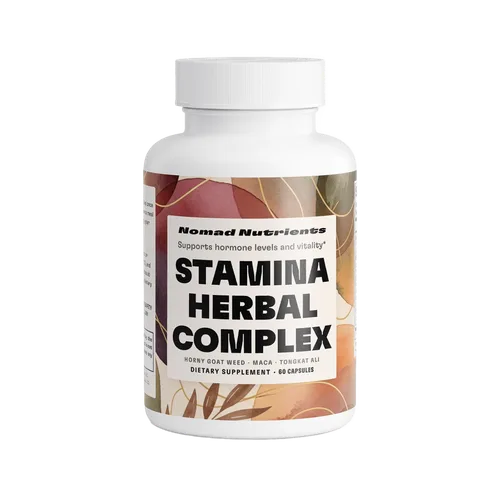
Stamina Herbal Complex — Hormonal Support Needs Multiple Targets
Total testosterone declines roughly 1–2% per year starting in the early 30s. What changes more noticeably is free testosterone: SHBG (sex hormone-binding globulin) increases with age, binding more total testosterone and making it unavailable to androgen receptors. The solution for most men isn't exogenous testosterone — TRT suppresses endogenous production through hypothalamic negative feedback and creates long-term dependency. The evidence-based approach is supporting the systems that regulate testosterone naturally through multiple pathways simultaneously.
Tongkat ali (Eurycoma longifolia) has the strongest evidence base among herbal testosterone support compounds — multiple RCTs showing increases in free testosterone, likely through SHBG binding reduction and mild LH stimulation. Saw palmetto addresses the prostate side of the equation, inhibiting 5-alpha reductase to reduce DHT-driven prostate growth — a near-universal concern after 40. Single-compound approaches are incomplete because the system has multiple bottlenecks that develop concurrently.
The stamina herbal complex combines saw palmetto, tongkat ali, horny goat weed, and ginseng in a multi-target formulation. The rationale: testosterone support without prostate management is incomplete for men over 35. Tongkat ali handles the SHBG and LH pathways. Saw palmetto handles the DHT-prostate pathway. Ginseng (panax) supports overall vitality through ginsenoside-mediated energy metabolism. Multi-target formulas outperform single compounds for hormonal support because the system has concurrent bottlenecks — addressing one while ignoring others produces partial results.
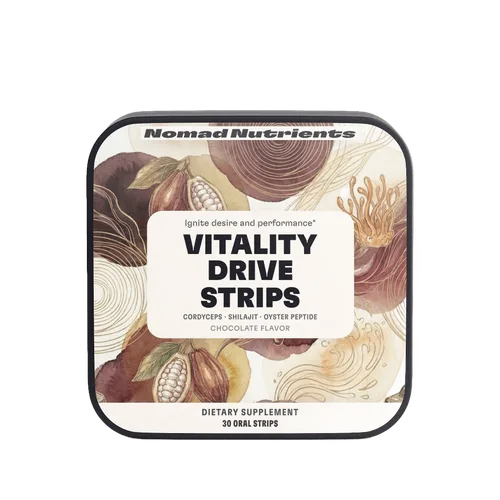
Vitality Drive Strips — Acute Performance When You Need It
This is the situational layer of the stack — not daily maintenance, but targeted support for specific performance demands. Cordyceps (Cordyceps militaris) enhances oxygen utilization through adenosine receptor modulation and increased mitochondrial ATP synthesis efficiency. Shilajit contains fulvic acid and dibenzo-alpha-pyrones that support mitochondrial CoQ10 function — a 2016 RCT in healthy men aged 45–55 found significant increases in total testosterone, free testosterone, and DHEA-S over 90 days. Zinc from oyster peptide is the mineral most directly linked to testosterone synthesis: the prostate contains the highest zinc concentration of any tissue, and zinc status directly influences 5-alpha reductase activity and the testosterone-estrogen conversion ratio via aromatase.
Sublingual delivery provides faster onset than capsules — useful when the goal is performance within a specific window rather than baseline maintenance over weeks.
Vitality drive strips deliver cordyceps, shilajit, and oyster peptide zinc sublingually. The strip format bypasses first-pass metabolism, reaching peak blood levels in 10–15 minutes versus 45–60 for capsules. Use situationally — before physical performance demands, not as a daily baseline (that's what the stamina complex and creatine handle). The sublingual delivery and multi-compound profile make this a targeted intervention for acute performance rather than chronic supplementation.
The Stack Approach — Why Isolated Supplements Stop Being Enough
The common pattern for men in their 40s is a lone multivitamin and maybe some fish oil. This was adequate at 30 because fewer systems were declining simultaneously. By 40, you're managing mitochondrial function (CoQ10), cardiovascular risk (omega-3), hormonal balance (tongkat ali, saw palmetto), phosphocreatine availability (creatine), and recovery capacity (all of the above) concurrently. These systems interact: CoQ10 and creatine both support ATP production through different mechanisms. Omega-3s and CoQ10 both protect cardiovascular function. Hormonal support compounds work better when the energetic foundation is in place — testosterone synthesis is an energy-intensive process that depends on mitochondrial output.
Stacking isn't about taking more — it's about recognizing that the systems declining after 40 are interconnected, and addressing them as a system produces better outcomes than addressing them in isolation.
The energy stack bundles the foundational compounds into a single protocol at a 25% discount. Start with creatine and omega-3 — they're foundational and lowest-risk. Add CoQ10 if you're on a statin or noticing energy decline. Layer in the hormonal support based on your specific symptoms and bloodwork. The vitality strips are the situational tool, not the daily foundation. Build the base first, add specificity second.
Creatine + whey + 92 trace minerals = Recover faster, lift heavier
Creatine for strength and cognitive output. Grass-fed whey for the protein floor. Sea Moss covers the trace minerals most lifters chronically run low on.


The 40s aren't a decline — they're a transition. The men who navigate it well aren't doing anything exotic. They're addressing the specific systems that are actually changing, with compounds that have evidence behind them, in the right order of priority.
Supplements address nutritional gaps and support declining biological systems. They don't replace sleep, exercise, or dietary quality. If you're sleeping six hours, eating processed food, and sedentary, creatine and CoQ10 aren't going to overcome that. But if the foundations are in place and you're still feeling the inflection — the slower recovery, the afternoon energy drop, the sense that your body isn't responding the way it used to — these six compounds have the evidence base to make a measurable difference.
Key Ingredients

Creatine Monohydrate
Creatine
EPA
Eicosapentaenoic Acid

DHA
Docosahexaenoic Acid

Coenzyme Q10
Ubiquinone-10
Maca Root
Lepidium meyenii

Longjack (Tongkat Ali)
Eurycoma longifolia
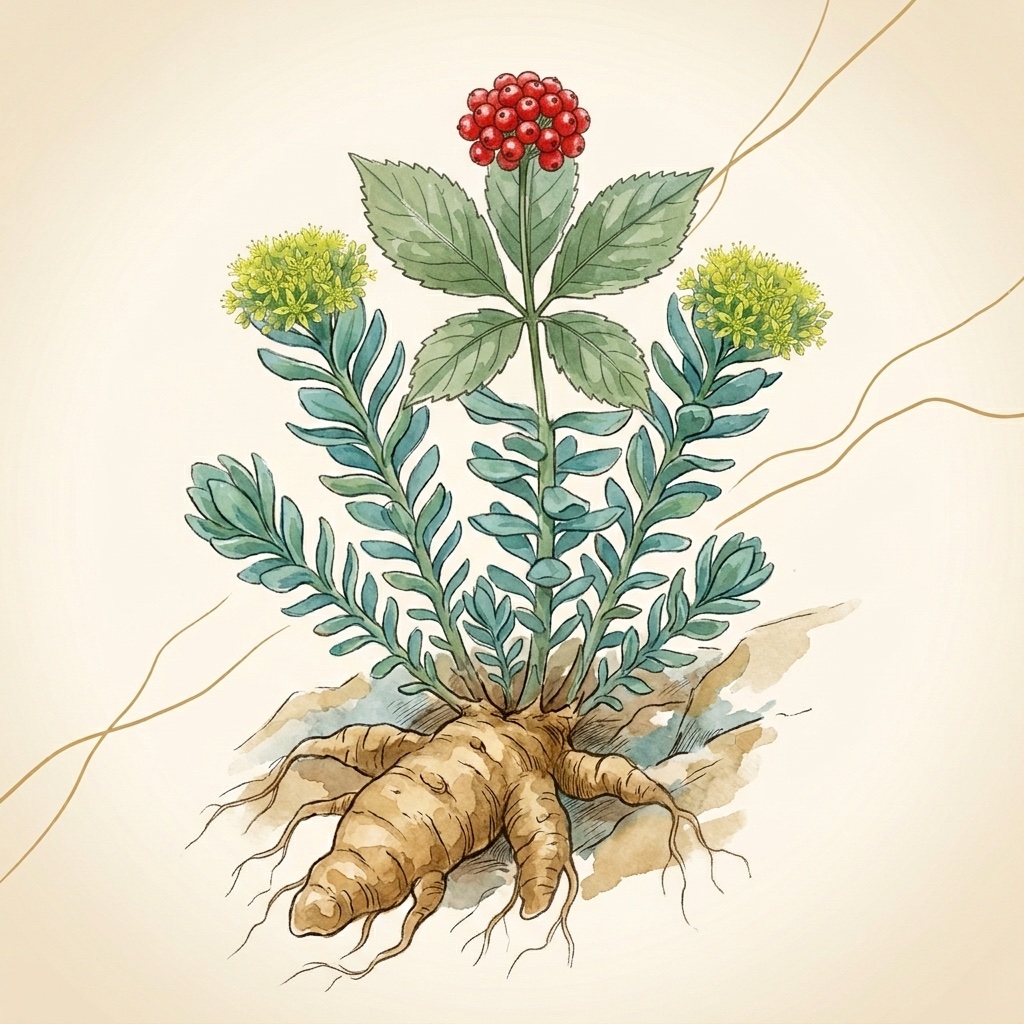
Red Asian Ginseng
Panax ginseng

Cordyceps Mushroom
Cordyceps militaris

Shilajit
Asphaltum punjabianum

Oyster Peptide
Crassostrea gigas
Three products. One protocol.
Pick 3. Save 25%. Free shipping every order. Myco cycles compounds monthly so your body never plateaus — and you never run out.
I built Nomad Nutrients because the supplement aisle is broken. Timing, dosing, and stack design matter more than the latest hero ingredient. We get the boring stuff right so you don't have to.
Build a stack from this article
$68.77$91.70
Comments
Leave a Comment
Keep reading.
5 Supplements for Dads and Dads-to-Be
Nobody tells you that becoming a dad is a physiological event — not just an emotional one. Your sleep architecture collapses. Your cortisol stays elevated for months. Your immune system gets stress-tested by every daycare pathogen your kid brings home. And if you're not a dad yet but trying to be, your sperm quality is shaped by the same compounds that will keep you functional after the baby arrives. Five supplements that serve both sides of the transition.
Natural Testosterone Support: What the Research Shows (And What It Doesn't)
No supplement will double your testosterone. Any product claiming 300% increases is misrepresenting rodent data or fabricating results. What natural compounds can do is meaningful but modest — free testosterone increases in the range of 10–25% over 8–12 weeks. For a man with low-normal levels, that's the difference between sluggish and functional. Here's what the clinical evidence actually supports, with honest effect sizes and clear boundaries.
When to Take Every Supplement (The Complete Timing Guide)
Your body absorbs, metabolizes, and responds to nutrients differently depending on when you take them. Fat-soluble compounds taken without fat pass through you. Stimulatory adaptogens taken at night keep you up. Minerals taken together compete for the same transporters. This is the complete timing protocol — organized by window, with the pharmacokinetic reasoning behind every recommendation.
How to Build Your First Supplement Stack (Without Wasting Money)
The supplement aisle is designed to overwhelm you into buying nothing or buying everything. Neither is correct. Here's a tiered framework — start at the foundation, add based on your goal, and only advance when the previous tier is habitual. Each tier is complete on its own. You don't need Tier 3 to benefit from Tier 1.
6 Biomarkers of Aging You Can Actually Influence
NAD+ decline, CoQ10 depletion, telomere shortening, mitochondrial Complex IV inefficiency, collagen loss, and phosphocreatine decline — six measurable markers of biological aging and the compounds that influence each one.
The 6 Supplements That Actually Have Clinical Evidence (And How to Stack Them)
Most supplements don't have clinical evidence worth citing. These six do — here's the specific research, the mechanism, and how they compound when stacked together.
Shop the products.
Four products. Earned their place in every stack.
These float to the top of nearly every Smart Stack — broad pathway coverage, strong evidence, real doses. Curated by Myco, rotated when something better comes along.
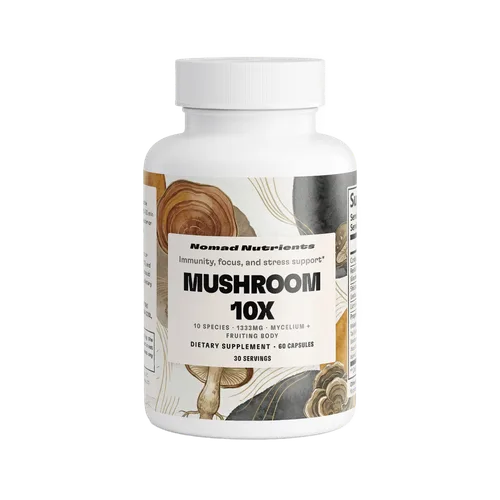
Mushroom 10X
Ten species in one capsule — the whole-spectrum support for immunity, focus, and energy.
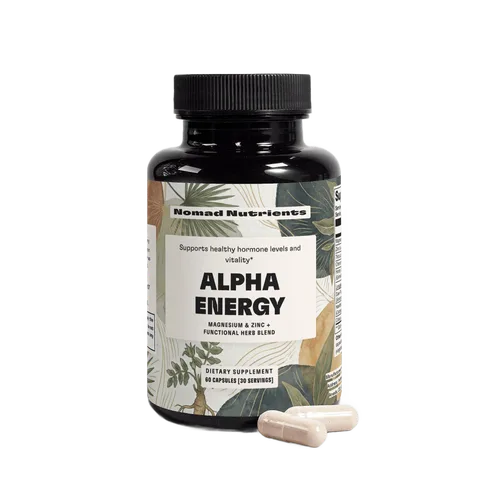
Alpha Energy
Testosterone. Energy. Drive. — Zinc, magnesium, and Tongkat Ali for natural vitality and peak performance.
Creatine Powder
The most-studied compound on earth. 5g pure — for stronger muscle and sharper thinking.
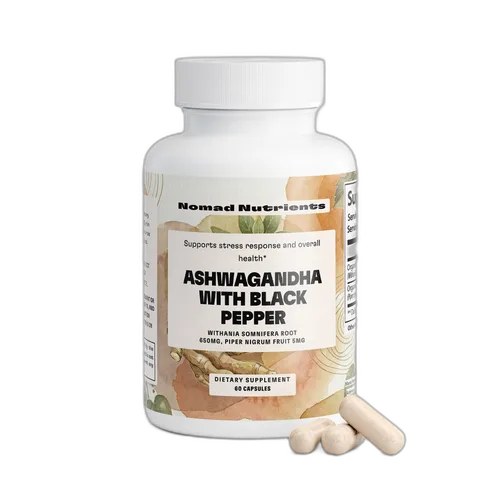
Ashwagandha
Cortisol control, calm focus, and deep recovery — the adaptogen that earns its place in every stack.
Founder’s Story
"Hi, I'm Tanner. I built Nomad for optimizers who want a real system — not just a subscription. You choose the direction, we handle the navigation. Pick your path and we'll route you there."
— Tanner
Chief Mushroom Officer