From the Lab[creatine][cognitive performance][brain health]

Creatine for Your Brain: What the Latest Research Means for Knowledge Workers

Tanner Gaucher
Nomad NutrientsChief Mushroom Officer · Reviewed by Myco
April 14, 2026
Abstract

A new Alzheimer's study found creatine boosts brain levels by 11%. Here's why desk athletes should care about the most underrated cognitive supplement.

Creatine for Your Brain: What the Latest Research Means for Knowledge Workers
FIG.01

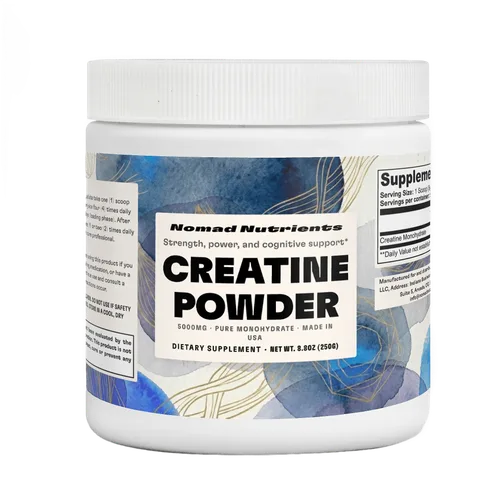
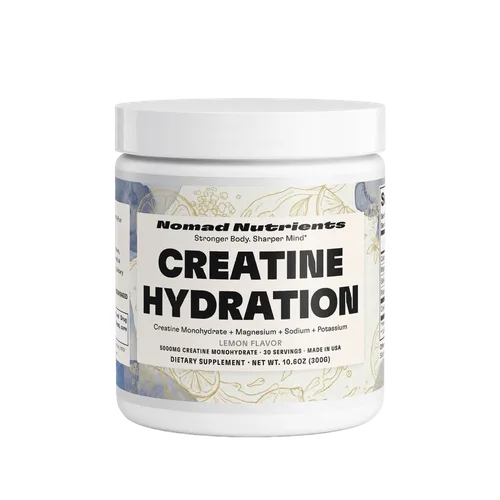
Primary compound referenced in this review

§ 01

Creatine Isn't Just for the Gym Anymore

If you associate creatine with bodybuilders and pre-workout shakes, you're not alone. For decades, creatine monohydrate has been the most studied sports supplement on the planet — proven to increase muscle power, strength, and recovery. But a growing body of research is revealing something the fitness industry never marketed: creatine is one of the most promising cognitive supplements available, and it might be exactly what desk athletes need.

Your brain accounts for roughly 2% of your body weight but consumes about 20% of your daily energy. That energy comes from ATP, and creatine is directly involved in ATP regeneration. When your brain is under metabolic stress — sleep deprivation, long focus sessions, hypoxia from sitting in a stuffy office — creatine availability becomes a bottleneck for cognitive performance.

§ 02

The CABA Trial: What Happened When Alzheimer's Patients Took Creatine

In early 2026, researchers at the University of Kansas Medical Center published results from the CABA (Creatine as a Biomarker in Alzheimer's) trial. Nineteen participants aged 60-90 with early Alzheimer's disease took 20 grams of creatine monohydrate daily for eight weeks. The results were striking: brain creatine levels increased by 11%, with moderate improvements in both working memory and executive function.

This wasn't an isolated finding. A broader review found that 5 of 6 recent studies (83.3%) reported a positive relationship between creatine supplementation and cognitive performance, particularly in memory and sustained attention tasks.

Why This Matters If You're 30, Not 70

You don't need to have Alzheimer's to benefit from better brain energetics. The same metabolic stress pathways that creatine supports in aging brains are the ones that get taxed when you're pushing through a four-hour deep work session, recovering from a short night of sleep, or trying to maintain focus after lunch.

Research on healthy adults has shown creatine supplementation improves performance on tasks requiring short-term memory and rapid processing — exactly the cognitive demands of writing code, reviewing documents, or making decisions in back-to-back meetings.

§ 03

The Desk Athlete Case for Creatine

Here's what makes creatine particularly interesting for knowledge workers compared to traditional nootropics:

No Stimulant, No Crash

Unlike caffeine-based nootropics (a common complaint about Thesis and similar blends), creatine works on cellular energy production, not neurotransmitter stimulation. There's no jitter risk, no anxiety spike, no afternoon crash. It supports sustained cognitive output without the rollercoaster.

Compounding Benefits Over Time

Creatine isn't an acute stimulant — it builds brain creatine stores over weeks. This means consistent daily supplementation creates a growing cognitive buffer. Think of it less like a cup of coffee and more like upgrading your brain's battery capacity.

One of the Most Studied Supplements in Existence

With thousands of published studies and decades of safety data, creatine monohydrate has one of the strongest evidence bases of any supplement. The International Society of Sports Nutrition considers it safe for long-term use, and recent research confirms its benefits extend well beyond muscle tissue.

§ 04

How to Add Creatine to Your Stack

The standard cognitive dose in research ranges from 3-5 grams daily (the CABA trial used a higher loading dose of 20g, typical of research protocols). Most desk athletes will benefit from a consistent 5g daily dose taken with any meal. Creatine monohydrate is the most researched form — skip the fancy variations that charge more for less evidence.

It pairs well with other cognitive support supplements. Consider stacking creatine with lion's mane for neurogenesis support, or with ashwagandha for stress buffering during high-pressure sprints. The goal is building a foundation of cognitive resilience, not chasing acute stimulation.

§ 05

The Bottom Line

Creatine is one of the most evidence-backed, affordable, and well-tolerated supplements available — and the cognitive benefits are finally getting the attention they deserve. For desk athletes who sit through eight-plus hours of demanding knowledge work, it addresses the exact metabolic bottleneck that limits sustained focus and mental performance. The 2026 research only strengthens the case: your brain runs on energy, and creatine helps make more of it.

Free Guide

Want the full breakdown?

Get our free 13-page Desk Athlete Supplement Guide — clinical doses, timing protocols, and goal-specific stacks.

Apply the research

Stack it while the research is fresh.

Pick three compounds. Myco handles the cycling schedule and ships only when you're running low.

Build your stack →
Apply the research

Build a stack around what you just read.

Pick three compounds. Myco handles the cycling protocol and ships only when you're running low.

25% off everythingFree U.S. shippingCancel anytime
Creatine Powder

Build a stack with this article

Creatine Powder+ 2 more

Build Stack

Comments

Leave a Comment

From the Journal

Keep reading.

01 / 12
Journal · creatine
RelatedJun 16, 2026

Creatine Isn't Just for the Gym: What the 2026 Brain Studies Actually Show

A new Alzheimer's trial found creatine slowed cognitive decline by 30%. A meta-analysis confirmed benefits for memory and focus in healthy adults. Here's what desk athletes should know.

Read article
Journal · desk athlete
RelatedJun 16, 2026

The Desk Athlete Stack: 5 Supplements for People Who Sit 8+ Hours a Day

You train your brain for 8 hours straight. Your body absorbs the collateral damage. Here are the 5 supplements that close the gap between how hard you work and how well you recover.

Read article
Journal · creatine
RelatedApr 10, 2026

When to Take Every Supplement (The Complete Timing Guide)

Your body absorbs, metabolizes, and responds to nutrients differently depending on when you take them. Fat-soluble compounds taken without fat pass through you. Stimulatory adaptogens taken at night keep you up. Minerals taken together compete for the same transporters. This is the complete timing protocol — organized by window, with the pharmacokinetic reasoning behind every recommendation.

Read article
Journal · creatine
RelatedApr 10, 2026

The Men's Supplement Stack After 40: What Actually Changes and What to Do About It

Something shifts in your 40s. Recovery takes longer, energy plateaus earlier in the day, and the things that used to take care of themselves quietly stop doing so. Several biological systems that were silently declining since your late 20s reach a threshold where you feel it. Here are the six compounds with evidence to address what's actually changing — in order of priority.

Read article
Journal · testosterone
RelatedApr 10, 2026

Natural Testosterone Support: What the Research Shows (And What It Doesn't)

No supplement will double your testosterone. Any product claiming 300% increases is misrepresenting rodent data or fabricating results. What natural compounds can do is meaningful but modest — free testosterone increases in the range of 10–25% over 8–12 weeks. For a man with low-normal levels, that's the difference between sluggish and functional. Here's what the clinical evidence actually supports, with honest effect sizes and clear boundaries.

Read article
Journal · supplement-stack
RelatedApr 10, 2026

How to Build Your First Supplement Stack (Without Wasting Money)

The supplement aisle is designed to overwhelm you into buying nothing or buying everything. Neither is correct. Here's a tiered framework — start at the foundation, add based on your goal, and only advance when the previous tier is habitual. Each tier is complete on its own. You don't need Tier 3 to benefit from Tier 1.

Read article

Founder’s Story

Tanner, Chief Mushroom Officer

"Hi, I'm Tanner. I built Nomad for optimizers who want a real system — not just a subscription. You choose the direction, we handle the navigation. Pick your path and we'll route you there."

— Tanner

Chief Mushroom Officer