From the Labginkgo-bilobapanax-ginsengcerebral-blood-flow

Ginkgo Biloba: Cerebral Blood Flow and What Your Brain's Vasculature Has Been Missing

Your brain consumes 20% of cardiac output but represents 2% of body mass. Cerebral blood flow is the supply chain for every cognitive function you have — and it declines measurably with age. Ginkgo biloba targets this vasculature through PAF inhibition, NO-mediated vasodilation, and antioxidant protection of the endothelium. Here's why the terpene lactones and flavone glycosides do different things, and why pairing ginkgo with panax ginseng creates a synergistic cerebrovascular stack.

Nomad Nutrients EditorialApril 10, 2026

8 min read · Filed under: Focus, Cognition, Nootropics

The oldest living tree species on Earth — unchanged for 270 million years — produces a leaf extract that targets the single most important variable in brain performance: blood flow. Not neurotransmitters. Not receptor density. Blood flow.

Your brain is the most metabolically demanding organ in your body. It consumes 20% of your total cardiac output, 20% of your oxygen, and 25% of your glucose — all while representing roughly 2% of your body mass. Every neurotransmitter synthesis pathway, every ion pump that maintains membrane potential, every synaptic vesicle that releases glutamate or acetylcholine depends on a continuous supply of oxygen and glucose delivered through cerebral vasculature.

When cerebral blood flow declines — as it does with age, atherosclerosis, chronic stress, and sedentary behavior — cognitive function declines in lockstep. Not because neurons are dying, but because they're under-supplied. Ginkgo biloba addresses this supply-side problem through multiple vascular mechanisms that are pharmacologically distinct and clinically documented.


PAF Inhibition: The Anti-Platelet Mechanism

Platelet-activating factor (PAF) is a phospholipid signaling molecule involved in platelet aggregation, inflammation, and vascular permeability. In the cerebral vasculature, PAF promotes platelet clumping, endothelial inflammation, and the cascade of events that lead to microvascular obstruction — small-vessel blockages that reduce perfusion to neural tissue.

The terpene lactone fraction of ginkgo extract — specifically ginkgolides A, B, C, and J — are potent and specific PAF receptor antagonists. Ginkgolide B in particular has been extensively studied as one of the most selective natural PAF inhibitors known. It binds to the PAF receptor on platelets and endothelial cells, blocking PAF-induced platelet aggregation without affecting other coagulation pathways.

This selectivity is important. Unlike aspirin (which irreversibly inhibits COX-1 and affects all thromboxane-mediated platelet function) or warfarin (which broadly inhibits vitamin K-dependent clotting factors), ginkgolides specifically target PAF-mediated platelet activation. This produces an anti-aggregatory effect that improves microvascular flow without the bleeding risk profile of broad-spectrum anticoagulants — though the interaction with prescription anticoagulants still requires caution.

The clinical relevance extends beyond platelet aggregation. PAF is also a mediator of neuroinflammation — it activates microglia, increases blood-brain barrier permeability, and promotes the release of pro-inflammatory cytokines in neural tissue. By antagonizing PAF receptors, ginkgolides reduce neuroinflammatory signaling alongside their vascular effects.

Nitric Oxide and Vasodilation

The flavone glycoside fraction of ginkgo extract — primarily quercetin, kaempferol, and isorhamnetin glycosides — operates through a different vascular mechanism: enhancing endothelial nitric oxide production.

Nitric oxide (NO) is the primary vasodilator in the cerebral circulation. It's produced by endothelial nitric oxide synthase (eNOS) in the endothelial cells lining blood vessels. NO diffuses into the smooth muscle layer surrounding the vessel, activates guanylate cyclase, increases cyclic GMP, and triggers smooth muscle relaxation — widening the vessel and increasing blood flow.

Ginkgo flavone glycosides upregulate eNOS expression and activity through multiple mechanisms: they increase intracellular calcium mobilization (which activates eNOS), enhance the phosphorylation of eNOS at its activating site (Ser1177 via the PI3K/Akt pathway), and reduce oxidative degradation of NO by scavenging superoxide radicals that would otherwise react with NO to form peroxynitrite.

This last mechanism — protecting NO from oxidative destruction — is where the antioxidant properties of ginkgo flavonoids become functionally relevant. The issue isn't generic "antioxidant support" — it's the specific protection of NO bioavailability in the vascular endothelium. Superoxide radicals produced by NADPH oxidase, xanthine oxidase, and uncoupled eNOS in the endothelium react with NO at near diffusion-limited rates, destroying the vasodilator before it can act. By scavenging superoxide in the vascular wall, ginkgo flavonoids preserve the NO that eNOS produces, resulting in net vasodilation.

Terpene Lactones vs. Flavone Glycosides: Two Systems, One Goal

Understanding ginkgo's pharmacology requires recognizing that its two primary bioactive fractions — terpene lactones and flavone glycosides — operate through independent mechanisms that converge on the same outcome: improved cerebral perfusion.

Terpene lactones (ginkgolides + bilobalide): PAF antagonism (anti-platelet, anti-neuroinflammatory), mitochondrial membrane stabilization (bilobalide specifically protects against cytochrome c release and mitochondrial permeability transition), and neuroprotection against ischemic and excitotoxic damage. These are the compounds unique to ginkgo — no other plant source produces them.

Flavone glycosides (quercetin, kaempferol, isorhamnetin glycosides): NO-mediated vasodilation, endothelial protection, superoxide scavenging, and modulation of vascular smooth muscle tone. These flavonoids are found in other plants, but ginkgo's specific glycoside profile and concentration are distinctive.

Standardized ginkgo extracts (EGb 761 is the most studied) are typically standardized to contain 24% flavone glycosides and 6% terpene lactones. This ratio reflects the natural composition of the leaf and has been used in the majority of clinical trials. Extracts that deviate significantly from this standardization — or that don't specify their terpene lactone content — may not produce the same vascular effects, particularly the PAF inhibition that requires adequate ginkgolide concentration.

The Ginkgo-Ginseng Synergy

Panax ginseng (Asian ginseng) contains ginsenosides — a class of triterpene saponins — that enhance cerebral blood flow through mechanisms complementary to ginkgo's. The combination has been studied in clinical trials and shows additive cognitive benefits beyond either compound alone.

Ginsenoside Rb1 promotes NO production via eNOS activation — the same downstream pathway as ginkgo flavonoids, but through a different upstream mechanism (ginsenosides activate eNOS via estrogen receptor-beta signaling and AMPK phosphorylation, while ginkgo flavonoids act through PI3K/Akt). This mechanistic convergence through different pathways creates a more robust vasodilatory signal than either compound alone.

Ginsenoside Rg1 has demonstrated neuroprotective effects mediated by BDNF upregulation, anti-apoptotic signaling (Bcl-2 upregulation, caspase-3 suppression), and neuroinflammatory modulation — complementing ginkgo's PAF-mediated anti-neuroinflammatory effects with a growth-factor-mediated neuroprotective layer.

Cholinergic enhancement: Panax ginseng ginsenosides modulate acetylcholine signaling — increasing choline acetyltransferase activity and acetylcholine release while showing mild acetylcholinesterase inhibition. Ginkgo doesn't directly target the cholinergic system to the same degree (though it has mild AChE inhibitory activity). The combination provides vascular support (ginkgo-dominant) plus neurotransmitter support (ginseng-dominant) — addressing both the supply side and the signaling side of cognitive performance.

Clinical trials of the ginkgo-ginseng combination (often at a 60mg ginkgo / 100mg ginseng ratio) have shown improvements in working memory, attention, and cognitive processing speed in healthy adults that exceed the effects of either compound in isolation. The Cognitive Drug Research (CDR) battery studies conducted by Kennedy et al. are the most cited evidence for this synergistic pairing.

Clinical Evidence and Cognitive Outcomes

Cerebral blood flow. Neuroimaging studies (SPECT, transcranial Doppler, ASL-MRI) have documented increased cerebral blood flow velocity and perfusion in healthy older adults and patients with cerebrovascular insufficiency following ginkgo supplementation. Effects are measurable within hours of a single dose and become more pronounced with chronic supplementation over 4-12 weeks.

Cognitive performance in healthy adults. A meta-analysis of 11 RCTs found statistically significant improvements in attention and cognitive processing speed with EGb 761 supplementation in healthy adults, with larger effect sizes in adults over 50. The effects are modest but consistent — this is not a dramatic cognitive enhancer, but a measurable improvement in the vascular infrastructure that supports cognition.

Age-related cognitive decline. The GuidAge trial (2854 participants, 5-year follow-up) and the GEM trial (3069 participants, median 6.1 years) — the two largest ginkgo RCTs ever conducted — showed no significant reduction in the incidence of Alzheimer's disease or dementia with ginkgo supplementation. However, secondary analyses and smaller trials have consistently shown benefits for processing speed, attention, and memory in populations with existing mild cognitive impairment. The interpretation: ginkgo improves vascular-mediated cognitive function but doesn't prevent neurodegenerative disease — a distinction that matters for setting realistic expectations.

Tinnitus and peripheral circulation. Ginkgo's vascular effects extend beyond the brain. Clinical evidence supports modest benefits for tinnitus (particularly when related to cerebrovascular insufficiency), peripheral arterial disease (improved walking distance in intermittent claudication), and Raynaud's phenomenon — all conditions involving inadequate vascular perfusion.

Dosage and Practical Considerations

Standard dose: 120-240mg daily of standardized extract (24% flavone glycosides, 6% terpene lactones), divided into 2-3 doses. Most clinical trials showing cognitive benefits use 120-160mg daily.

Onset: Acute vascular effects (increased cerebral blood flow velocity) are measurable within 2-4 hours. Cognitive performance improvements typically emerge at 4-8 weeks of consistent supplementation as chronic vascular adaptations accumulate.

Ginkgo-ginseng pairing: The studied ratio is approximately 60mg ginkgo extract to 100mg panax ginseng extract, taken 1-2 times daily. This combination can be taken continuously or cycled (the ginseng component is traditionally cycled in 8-week blocks).

Drug interactions: Ginkgo's PAF-antagonist and mild anticoagulant effects create a meaningful interaction risk with anticoagulant and antiplatelet medications (warfarin, heparin, aspirin, clopidogrel). Increased bleeding risk has been documented in case reports, though controlled studies suggest the risk is lower than early reports indicated. If you're on anticoagulant therapy, consult your prescriber before adding ginkgo. Additionally, ginkgo may interact with seizure threshold-lowering medications and CYP-metabolized drugs (CYP2C9 and CYP3A4 substrates).

Quality considerations: Unstandardized ginkgo products and whole-leaf preparations may contain ginkgolic acids — alkylphenol compounds that are allergenic and potentially genotoxic. Standardized extracts (EGb 761 and equivalents) limit ginkgolic acid content to less than 5 ppm. This is not a trivial quality distinction — always verify that the extract is standardized and ginkgolic acid-limited.

The Honest Frame

Ginkgo biloba is a cerebrovascular intervention, not a neurotransmitter hack. It works by improving the supply chain — blood flow, oxygen delivery, glucose transport — that every cognitive process depends on. The mechanisms are pharmacologically well-characterized: PAF antagonism through terpene lactones, NO-mediated vasodilation through flavone glycosides, and endothelial protection through targeted antioxidant activity.

It won't make you smarter. It won't prevent Alzheimer's. What the evidence supports is that it improves the vascular efficiency of your brain — and in a population where cerebral blood flow declines measurably with age, that improvement has functional cognitive consequences. Pairing it with panax ginseng adds a complementary vascular and cholinergic dimension that clinical data suggests is more effective than either compound alone.

The brain runs on blood flow. Ginkgo optimizes the pipes.

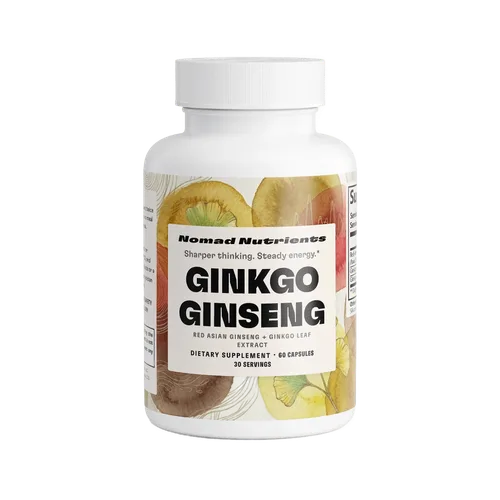
Ginkgo Ginseng
Featured in this article

Ginkgo Ginseng

$20.17$26.90Stack price

References

  1. DeFeudis FV, Drieu K. "Ginkgo biloba extract (EGb 761) and CNS functions: basic studies and clinical applications." Current Drug Targets, 2000.
  2. Kennedy DO, et al. "Modulation of cognition and mood following administration of single doses of Ginkgo biloba, ginseng, and a ginkgo/ginseng combination to healthy young adults." Physiology & Behavior, 2002.
  3. Vellas B, et al. "Long-term use of standardised Ginkgo biloba extract for the prevention of Alzheimer's disease (GuidAge): a randomised placebo-controlled trial." The Lancet Neurology, 2012.
  4. DeKosky ST, et al. "Ginkgo biloba for prevention of dementia: a randomized controlled trial (GEM)." JAMA, 2008.
  5. Singh B, et al. "An updated review on the pharmacology of Ginkgo biloba extract." Phytotherapy Research, 2015.
  6. Maclennan KM, et al. "The CNS effects of Ginkgo biloba extracts and ginkgolide B." Progress in Neurobiology, 2002.

Free Guide

Want the full breakdown?

Get our free 13-page Desk Athlete Supplement Guide — clinical doses, timing protocols, and goal-specific stacks.

Mechanisms of Action

Cerebral Blood Flow
Click to expand
Cerebral Blood Flow MechanismGinkgo biloba increases cerebral perfusion through two complementary compound familiesGinkgo ExtractEGb 761 standardized extractTERPENE LACTONESGinkgolides (A, B, C)Diterpene compounds unique to GinkgoPAF InhibitionPlatelet-activating factor blockedReduced Platelet AggregationBlood viscosity ↓ → smoother cerebral flowFLAVONE GLYCOSIDESFlavones (Quercetin, Kaempferol)Polyphenol antioxidantseNOS UpregulationEndothelial nitric oxide synthase ↑Cerebral VasodilationNO → smooth muscle relaxation → vessels widenCerebral Blood Flow ↑Dual mechanism: thinner blood + wider vesselsCognitive PerformanceWorking memory, processing speed, attention
Delivery Utilization Stack
Click to expand
Delivery + Utilization StackGinkgo delivers blood to the brain; Ginseng ensures neurons can use what arrivesGINKGO — DELIVERYGet more blood to the brainPAF BlockadeGinkgolides inhibit platelet aggregationNO VasodilationeNOS ↑ → cerebral arteries dilateGlucose + O₂ ArriveIncreased perfusion delivers substratesGINSENG — UTILIZATIONUse what arrives more efficientlyGinsenoside Rg1Primary neuroactive saponinNeuronal Glucose Uptake ↑GLUT transporter expression enhancedATP Production OptimizedMitochondrial efficiency ↑ in neuronsCombined: Deliver More + Use MoreGinkgo ↑ supply, Ginseng ↑ demand efficiency→ Net cognitive output exceeds either aloneSynergy mechanism: supply-side (Ginkgo) + demand-side (Ginseng) optimizationThis is why traditional formulations pair these two herbs — delivering fuel without utilization wastes the delivery

Featured in this article

Ginkgo Ginseng
Featured in this article

Ginkgo Ginseng

$20.17$26.90Stack price
Build a stack with this article

Start with Ginkgo Ginseng. Myco picks the rest.

Ginkgo Ginseng
+
+
Build This StackBrowse preset stacksFree shipping included
Ginkgo Ginseng

Build a stack with this article

Ginkgo Ginseng+ 2 more

Build Stack

Comments

Leave a Comment

From the Journal

Keep Reading

Related
ashwagandhaMar 12, 2026

The Science of Adaptogens: How Your Body's Stress Response Actually Works

Adaptogen" has become a marketing term. The pharmacological category is real — here's the actual mechanism behind the HPA axis, allostatic load, and what each major adaptogen is specifically doing.

Read article
creatineApr 14, 2026

Creatine for Your Brain: What the Latest Research Means for Knowledge Workers

A new Alzheimer's study found creatine boosts brain levels by 11%. Here's why desk athletes should care about the most underrated cognitive supplement.

Read article
creatineApr 10, 2026

When to Take Every Supplement (The Complete Timing Guide)

Your body absorbs, metabolizes, and responds to nutrients differently depending on when you take them. Fat-soluble compounds taken without fat pass through you. Stimulatory adaptogens taken at night keep you up. Minerals taken together compete for the same transporters. This is the complete timing protocol — organized by window, with the pharmacokinetic reasoning behind every recommendation.

Read article
creatineApr 10, 2026

The Men's Supplement Stack After 40: What Actually Changes and What to Do About It

Something shifts in your 40s. Recovery takes longer, energy plateaus earlier in the day, and the things that used to take care of themselves quietly stop doing so. Several biological systems that were silently declining since your late 20s reach a threshold where you feel it. Here are the six compounds with evidence to address what's actually changing — in order of priority.

Read article
collagenApr 10, 2026

The Complete Collagen Guide: Types, Formats, Timing, and Whether It Actually Works

Collagen is the most abundant protein in your body and the most searched supplement category after protein powder. When you ingest hydrolyzed collagen, you're not depositing intact molecules into your skin — the molecule is far too large. What happens is more interesting: specific peptide fragments survive digestion, accumulate in the dermis, and serve as signaling molecules that upregulate your body's own collagen production. This guide maps the mechanism, evaluates the evidence, and explains why format and timing determine whether supplementation works or wastes your money.

Read article
testosteroneApr 10, 2026

Natural Testosterone Support: What the Research Shows (And What It Doesn't)

No supplement will double your testosterone. Any product claiming 300% increases is misrepresenting rodent data or fabricating results. What natural compounds can do is meaningful but modest — free testosterone increases in the range of 10–25% over 8–12 weeks. For a man with low-normal levels, that's the difference between sluggish and functional. Here's what the clinical evidence actually supports, with honest effect sizes and clear boundaries.

Read article

Page 1 of 11 · 66 articles

Founder’s Story

Tanner, Chief Mushroom Officer

"Hi, I'm Tanner, Chief Mushroom Officer at Nomad Nutrients. I built this for people like me—optimizers who want a flexible, all-in-one supplement stack without the hassle. Build yours, dial it in, and keep exploring."

— Tanner

Chief Mushroom Officer