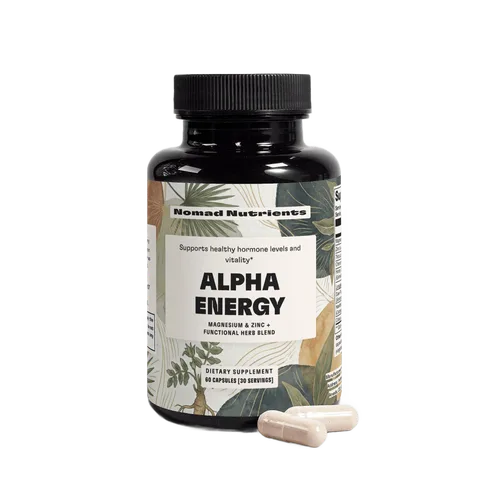
True adaptogens modulate HPA axis activity through several distinct mechanisms depending on the compound. The common thread is that they don't simply suppress or stimulate — they restore regulatory range. They make the system more responsive to its own feedback.
Let's map the major ones precisely.
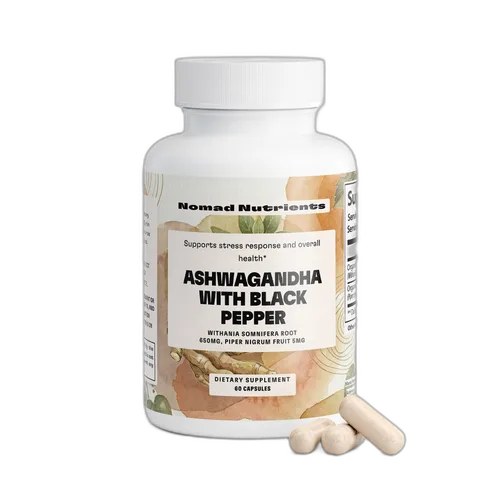
Ashwagandha (Withania somnifera)
Primary mechanism: glucocorticoid receptor sensitization and cortisol biosynthesis modulation
Ashwagandha's active compounds — withanolides, particularly withaferin A and withanolide D — are steroidal lactones structurally similar enough to endogenous steroid hormones to interact with hormone receptor pathways directly.
At the receptor level, withanolides appear to sensitize glucocorticoid receptors — restoring their ability to detect cortisol and trigger the negative feedback signal. In a chronically stressed system where receptor desensitization has weakened the feedback loop, this is the intervention point. You're not suppressing cortisol production so much as helping the system remember how to regulate it.
Withanolides also show GABAergic activity at the hypothalamic level — binding to GABA-A receptors and reducing CRH release at the top of the cascade. And there is evidence for direct modulation of adrenal cortisol biosynthesis, specifically the enzymatic pathway involved in converting precursors to active cortisol.
The net effect: cortisol reduction in the 20–30% range over 60 days in controlled trials, with stress perception improvements appearing earlier. Ashwagandha is the most extensively trialed adaptogen in human studies, and its mechanism is the most thoroughly characterized.
Best for: Chronic stress with elevated cortisol baseline, HPA axis hyperreactivity, impaired sleep from cortisol dysregulation.
Rhodiola Rosea
Primary mechanism: monoamine preservation and stress protein induction
Rhodiola operates through a fundamentally different mechanism than ashwagandha — which is why combining them makes pharmacological sense rather than being redundant.
Rosavins and salidroside — Rhodiola's primary bioactives — inhibit monoamine oxidase (MAO), the enzyme responsible for breaking down dopamine, serotonin, and norepinephrine in the synapse. Under acute stress, these neurotransmitters are released and rapidly degraded. Chronic stress depletes the monoamine pool over time, producing the fatigue, flat affect, and motivational deficits associated with burnout.
By slowing MAO activity, Rhodiola preserves monoamine availability under stress conditions — maintaining neurotransmitter tone without directly stimulating synthesis or release.
The second mechanism involves heat shock proteins (HSPs) and stress proteins — molecular chaperones that protect cellular proteins from stress-induced damage and misfolding. Salidroside has been shown to upregulate HSP70 and other protective proteins, effectively increasing cellular stress tolerance at a structural level.
Rhodiola also shows direct effects on cortisol — but through a different pathway than ashwagandha. It appears to modulate the sensitivity of the pituitary to CRH signaling, reducing ACTH release in response to a given CRH stimulus.
Best for: Fatigue-dominant stress profiles, burnout with low motivation and flat affect, acute performance demand (Rhodiola shows more immediate effects than most adaptogens — within hours of a single dose in some research).
Holy Basil (Ocimum tenuiflorum / Tulsi)
Primary mechanism: COX inhibition, cortisol modulation, and adaptogenic neuroendocrine effects
Holy basil contains several active compound classes: eugenol, ursolic acid, rosmarinic acid, and ocimumosides A and B — the last two being compounds specific to tulsi and most directly linked to its adaptogenic activity.
Ocimumosides have demonstrated direct cortisol-lowering effects in animal models and early human research, and appear to modulate the noradrenergic system — the branch of the stress response mediated by norepinephrine rather than cortisol. This is a distinct pathway from the HPA axis proper, targeting the sympathetic nervous system arm of stress response.
Eugenol and ursolic acid contribute significant COX-2 inhibition — reducing prostaglandin-mediated inflammation that chronic stress both causes and is worsened by. This makes holy basil particularly relevant for the inflammatory downstream effects of allostatic load.
Holy basil also has well-characterized blood glucose stabilizing effects, relevant because cortisol chronically elevates blood glucose and insulin resistance is a common consequence of HPA dysregulation.
Best for: Stress with significant inflammatory component, blood glucose dysregulation from chronic cortisol exposure, anxiety with a sympathetic nervous system activation pattern.
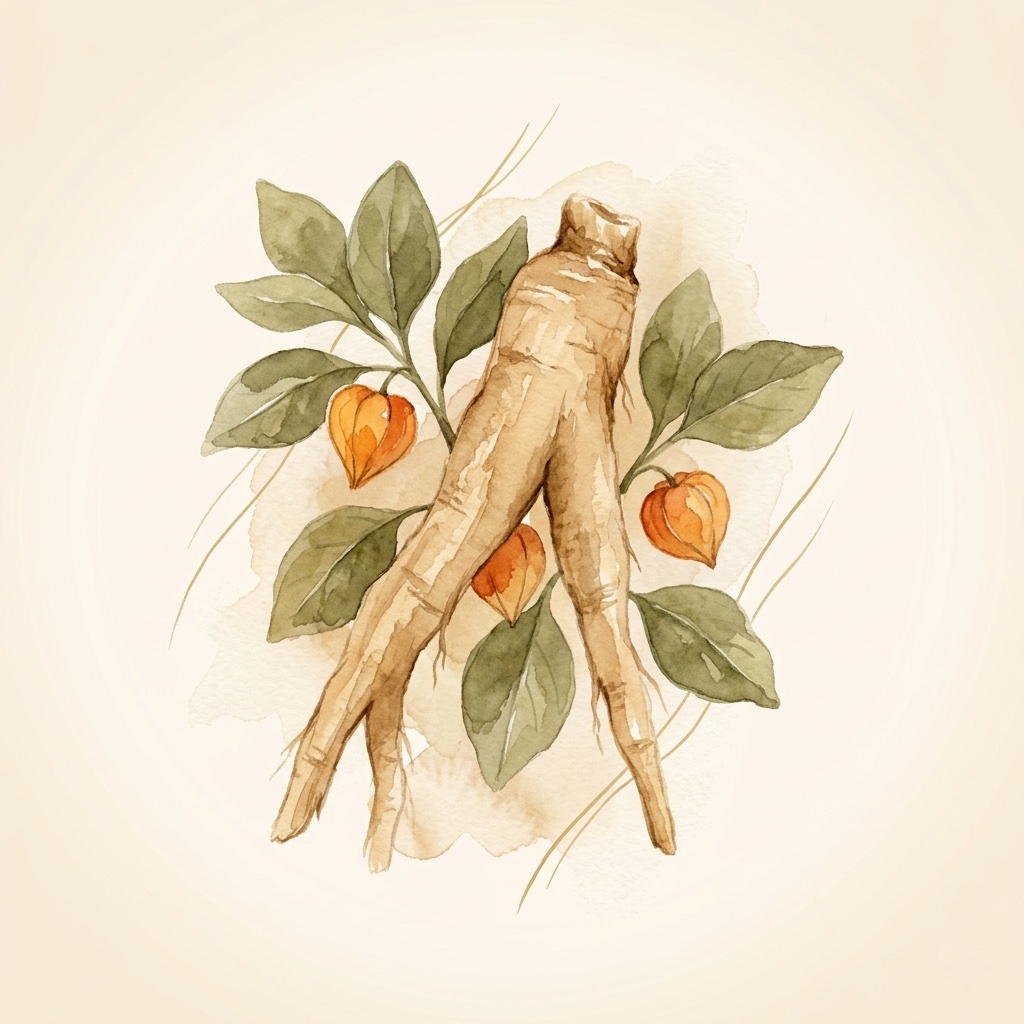
Panax Ginseng
Primary mechanism: ginsenoside modulation of HPA axis and neurotransmitter systems
Panax ginseng's active compounds — ginsenosides, a diverse family of triterpenoid saponins — are pharmacologically complex because different ginsenosides have different and sometimes opposing effects depending on dose and context. This makes ginseng the most nuanced adaptogen to characterize precisely.
At the HPA axis level, ginsenosides modulate the hypothalamic release of CRH and the pituitary's ACTH output — reducing the upstream signal rather than acting at the receptor or adrenal level. Some ginsenosides also show direct glucocorticoid receptor affinity, similar to ashwagandha's withanolides, though through a different molecular interaction.
Ginseng additionally modulates dopaminergic and serotonergic signaling, supporting neurotransmitter tone under stress in a manner that partially overlaps with Rhodiola's monoamine effects — but through synthesis modulation rather than degradation inhibition.
The cognitive performance data for Panax ginseng is among the strongest of any adaptogen, with multiple controlled trials demonstrating improvements in working memory, reaction time, and sustained attention — particularly under fatigue conditions. The mechanism likely involves both the HPA modulation and direct neurotransmitter support.
Best for: Cognitive fatigue, stress with measurable performance impairment, longer-term HPA regulation (ginseng effects tend to build over weeks rather than being as acutely noticeable as Rhodiola).