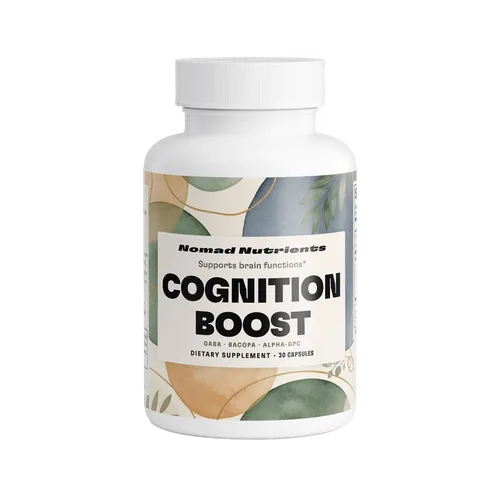
The most rigorous human clinical work on Bacopa has come out of Australia — particularly from Swinburne University's Centre for Human Psychopharmacology, where researchers including Con Stough and colleagues conducted a series of double-blind, placebo-controlled trials that set the methodological standard for this compound.
The landmark 2001 Stough et al. trial: 46 healthy adults received either 300mg standardized Bacopa extract or placebo daily for 12 weeks. The Bacopa group showed significantly improved performance on the Rey Auditory Verbal Learning Test (a measure of verbal learning rate and delayed recall) and the Logical Memory test — with the improvements most pronounced on delayed recall measures (retention over time) rather than immediate recall. This distinction is important: Bacopa doesn't appear to sharpen in-the-moment processing as much as it strengthens the consolidation and retention of what's learned.
A 2008 follow-up by the same group (Stough et al.) using 300mg over 90 days replicated the memory findings and additionally found improvements in spatial working memory — the cognitive function used for holding and manipulating visual-spatial information.
A 2014 meta-analysis by Kongkeaw et al. pooled data from nine controlled trials and found consistent, statistically significant improvements in cognitive performance — particularly for speed of visual information processing, learning rate, and memory consolidation — with stronger effects in studies of 12 weeks or longer.
The consistent pattern across trials: delayed recall and memory consolidation are the primary outcomes, the effects strengthen with duration, and the 12-week mark is where the signal becomes most consistent. This is mechanistically coherent — you'd expect structural synaptic changes to produce the most pronounced effects on retention over time rather than immediate processing speed.