8 min read · Filed under: Anti-Inflammatory, Recovery, Foundations
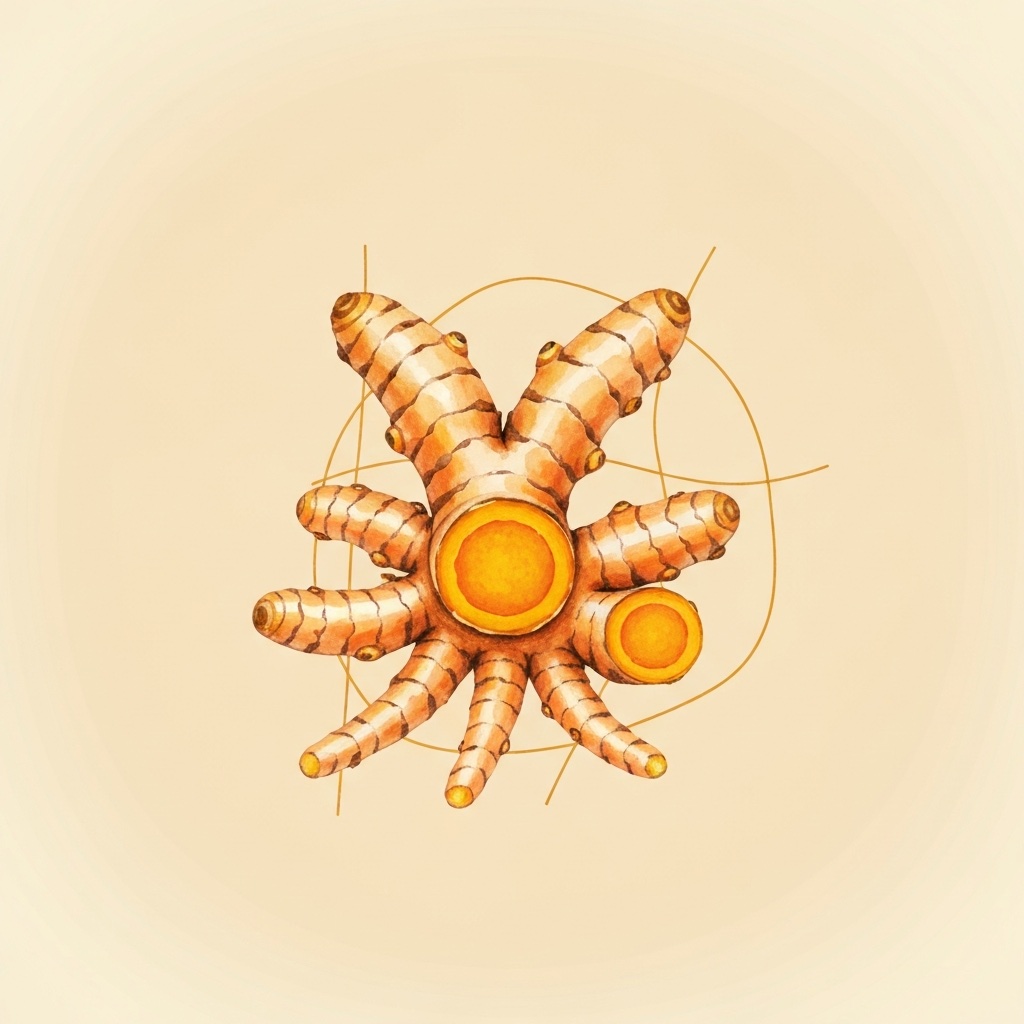
Turmeric has been used in Ayurvedic and traditional Chinese medicine for thousands of years. But the reason it keeps showing up in modern pharmacological research has nothing to do with tradition — it's because curcumin, the primary bioactive polyphenol in turmeric rhizome, hits one of the most important molecular targets in inflammation biology: NF-kB.
The problem is that curcumin is almost comically difficult to absorb. Oral bioavailability in humans is near zero without intervention. This creates a strange situation: a compound with extraordinary mechanistic data and a delivery problem that undermines nearly every clinical application. Understanding both sides — the mechanism and the bottleneck — is the only way to use it intelligently.
NF-kB: The Master Inflammatory Switch
Nuclear factor kappa-light-chain-enhancer of activated B cells — NF-kB — is a transcription factor complex that controls the expression of over 500 genes involved in inflammation, immune response, cell survival, and proliferation. It's not one pathway among many. It's the convergence point.
Under normal conditions, NF-kB sits inactive in the cytoplasm, bound to its inhibitor protein IkB-alpha. When inflammatory signals arrive — cytokines like TNF-alpha and IL-1beta, pathogen-associated molecules, oxidative stress — they activate the IKK complex (IkB kinase), which phosphorylates IkB-alpha, tagging it for degradation. Once IkB-alpha is gone, NF-kB is free to translocate into the nucleus and switch on inflammatory gene transcription.
The genes it activates include COX-2 (the enzyme that produces pro-inflammatory prostaglandins), iNOS (inducible nitric oxide synthase), TNF-alpha, IL-6, IL-1beta, and a cascade of adhesion molecules and chemokines that recruit immune cells to sites of inflammation. When this system is acutely activated, it's adaptive. When it's chronically activated — as in metabolic syndrome, obesity, autoimmune conditions, and the low-grade systemic inflammation that accelerates aging — it becomes pathological.
Curcumin inhibits NF-kB activation at multiple points. It suppresses IKK activity directly, preventing IkB-alpha phosphorylation. It blocks NF-kB nuclear translocation. And it downregulates NF-kB-dependent gene products downstream. This multi-point suppression is why curcumin's anti-inflammatory profile is broader than single-target pharmaceuticals like selective COX-2 inhibitors — it's hitting the regulatory hub, not just one output.
Beyond NF-kB: COX-2, AMPK, and the NLRP3 Inflammasome
While NF-kB suppression is the headline mechanism, curcumin's pharmacological profile extends into several adjacent pathways that compound its anti-inflammatory effect.
COX-2 inhibition. Curcumin directly suppresses cyclooxygenase-2 expression and activity — the same enzyme targeted by NSAIDs like ibuprofen and celecoxib. Unlike non-selective NSAIDs, curcumin doesn't significantly inhibit COX-1, which is constitutively expressed and essential for gastric mucosal protection. This selectivity profile is one reason curcumin supplementation is associated with fewer gastrointestinal side effects than chronic NSAID use, though the clinical potency is lower at achievable serum concentrations.
AMPK activation. AMP-activated protein kinase is a central metabolic sensor that, when activated, shifts cellular metabolism toward catabolic pathways — increasing fatty acid oxidation, glucose uptake, and mitochondrial biogenesis while suppressing anabolic and inflammatory signaling. Curcumin activates AMPK through upstream kinase LKB1 and by inhibiting mTORC1 signaling. This links curcumin's anti-inflammatory effects to metabolic health outcomes — improved insulin sensitivity, reduced hepatic lipid accumulation, and enhanced mitochondrial function.
NLRP3 inflammasome modulation. The NLRP3 inflammasome is a cytoplasmic protein complex that, when activated, cleaves pro-IL-1beta and pro-IL-18 into their active forms and triggers pyroptosis — inflammatory cell death. NLRP3 dysregulation is implicated in gout, type 2 diabetes, Alzheimer's disease, and atherosclerosis. Curcumin suppresses NLRP3 assembly by inhibiting the priming step (NF-kB-dependent NLRP3 transcription) and the activation step (blocking potassium efflux and mitochondrial ROS production that trigger complex assembly). This dual inhibition makes curcumin one of the more complete natural NLRP3 modulators studied to date.
Pro-resolution signaling. Inflammation resolution isn't passive — it requires active signaling through specialized pro-resolving mediators (SPMs) including lipoxins, resolvins, and maresins. Curcumin upregulates 15-lipoxygenase activity and promotes lipoxin A4 production, actively driving resolution rather than merely suppressing initiation. This is a critical distinction from pure anti-inflammatory agents that block the onset of inflammation without supporting its resolution, potentially leaving tissue damage unrepaired.
The Bioavailability Problem
Here's where the story gets complicated. Curcumin has extraordinary in vitro activity against nearly every inflammatory target researchers throw at it. Cell culture studies show potent NF-kB inhibition at low micromolar concentrations. The problem is getting those concentrations to exist inside a living human.
Oral curcumin faces a gauntlet of pharmacokinetic challenges:
Poor aqueous solubility. Curcumin is highly lipophilic and practically insoluble in water at physiological pH. In the aqueous environment of the GI tract, it precipitates out of solution rather than dissolving for absorption.
Rapid intestinal metabolism. Enterocytes in the gut wall express UDP-glucuronosyltransferases and sulfotransferases that conjugate curcumin during first-pass intestinal metabolism. A large fraction is glucuronidated or sulfated before it even reaches the portal circulation.
Aggressive hepatic clearance. Whatever survives intestinal metabolism faces extensive hepatic phase II conjugation. The liver converts curcumin to curcumin glucuronide and curcumin sulfate — metabolites that are biologically inactive at the parent compound's target sites — and rapidly excretes them in bile.
Rapid systemic elimination. The small amount of free curcumin that reaches systemic circulation has a half-life measured in minutes, not hours. Plasma concentrations after a standard 2g oral dose are often undetectable or in the low nanomolar range — orders of magnitude below the micromolar concentrations that produce effects in cell culture.
This pharmacokinetic profile has led some researchers to describe curcumin as a PAINS compound (pan-assay interference compound) — a molecule that looks active in vitro but fails in vivo because the in vitro conditions don't reflect physiological drug exposure. That critique is partially valid but incomplete: the mechanisms are real, the targets are real, and the clinical effects exist — they just require solving the delivery problem.
Why Piperine Changes the Equation
Piperine is the primary bioactive alkaloid in black pepper (Piper nigrum). Its co-administration with curcumin is the most extensively studied and validated bioavailability enhancement strategy for curcuminoids, and the mechanism is well understood.
Glucuronidation inhibition. Piperine is a potent inhibitor of UDP-glucuronosyltransferase (UGT) enzymes — the same enzymes responsible for curcumin's rapid conjugation in the intestinal wall and liver. By inhibiting UGT activity, piperine prevents the conversion of free curcumin to its inactive glucuronide metabolite, allowing more parent compound to reach systemic circulation.
The Shoba study. The landmark 1998 pharmacokinetic study by Shoba et al. demonstrated that co-administration of 20mg piperine with 2g curcumin increased curcumin bioavailability by 2,000% in human subjects. Peak serum concentrations that were previously undetectable became measurable and sustained. This finding has been replicated and extended in subsequent research, establishing piperine co-administration as the minimum viable delivery strategy for oral curcumin.
P-glycoprotein inhibition. Piperine also inhibits P-glycoprotein (P-gp), an efflux transporter in the intestinal epithelium that actively pumps curcumin back into the gut lumen before it can be absorbed. By blocking this efflux, piperine increases net intestinal absorption independent of its effect on conjugation enzymes.
Thermogenic enhancement. Piperine stimulates TRPV1 receptors in the gut, which increases local blood flow to the intestinal mucosa and may enhance passive absorption of co-administered compounds. This is a secondary mechanism but contributes to the overall bioavailability enhancement.
The practical implication is binary: curcumin without piperine is a fundamentally different proposition than curcumin with piperine. The 20x bioavailability increase isn't marginal — it's the difference between subtherapeutic and potentially therapeutic plasma concentrations. Any curcumin formulation that doesn't include piperine (or an equivalent bioavailability enhancer) is leaving most of the compound's potential in the GI tract.
Clinical Data: What the Trials Show
When the bioavailability problem is addressed — through piperine co-administration, lipid formulations, or nanoparticle delivery — the clinical signal becomes consistent:
Joint health and osteoarthritis. Multiple RCTs have demonstrated curcumin's efficacy in reducing pain and improving function in knee osteoarthritis, with some head-to-head trials showing non-inferiority to ibuprofen with fewer GI side effects. A 2021 meta-analysis of 16 trials found significant reductions in WOMAC pain scores and CRP levels with bioavailability-enhanced curcumin formulations.
Exercise-induced inflammation. Curcumin supplementation reduces delayed-onset muscle soreness (DOMS), post-exercise CRP and IL-6 elevations, and markers of muscle damage (creatine kinase) in trained athletes. The anti-inflammatory effect appears most relevant for recovery from eccentric exercise and high-volume training blocks.
Metabolic markers. Trials in populations with metabolic syndrome show reductions in fasting glucose, HbA1c, triglycerides, and CRP with curcumin supplementation — consistent with the AMPK activation and NF-kB suppression mechanisms. Effects are modest but statistically significant across multiple meta-analyses.
Mood and cognition. A growing body of evidence links curcumin to improvements in depressive symptoms — potentially mediated by BDNF upregulation, monoamine oxidase inhibition, and neuroinflammation reduction. A 2020 meta-analysis found curcumin significantly more effective than placebo for depressive symptoms across 10 RCTs, though effect sizes were small to moderate.
Dosage, Timing, and Practical Considerations
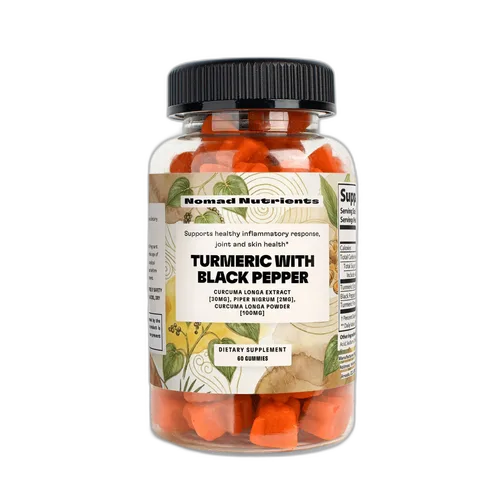
Effective clinical doses of curcuminoids range from 500mg to 2,000mg daily, always with a bioavailability enhancer. The most studied ratio is curcumin to piperine at roughly 100:1 (e.g., 500mg curcumin with 5mg piperine, or 1,000mg curcumin with 10mg piperine).
Take with fat. Curcumin is lipophilic. Taking it with a meal containing dietary fat significantly improves micellar solubilization in the gut and enhances absorption beyond what piperine alone achieves. The two strategies are additive — use both.
Timing. For systemic anti-inflammatory effects, split dosing (morning and evening) maintains more consistent plasma levels given curcumin's short half-life, even with bioavailability enhancement. For joint-specific applications, taking the full dose 1-2 hours before or after exercise aligns peak plasma concentration with the post-exercise inflammatory window.
Onset. Anti-inflammatory effects build over 4-8 weeks of consistent use. Joint pain improvements typically emerge at 2-4 weeks. This is not an acute analgesic — it modulates the underlying inflammatory biology, which takes time.
Drug interactions. Curcumin and piperine both inhibit cytochrome P450 enzymes (CYP3A4, CYP1A2) and UDP-glucuronosyltransferases. This can alter the metabolism of co-administered pharmaceuticals, particularly blood thinners (warfarin), certain statins, and immunosuppressants. If you're on prescription medication, verify with your prescriber before adding curcumin + piperine to your protocol.
The Honest Frame
Curcumin's mechanism of action is legitimate and well-characterized. NF-kB suppression, COX-2 inhibition, AMPK activation, NLRP3 modulation, and pro-resolution signaling represent a genuinely broad anti-inflammatory profile that few single compounds can match. The clinical data confirms directionally meaningful effects on joint health, exercise recovery, metabolic markers, and mood.
But the compound is only as good as its delivery. Curcumin without piperine is a gesture toward anti-inflammatory support. Curcumin with piperine is a pharmacokinetically viable intervention. The 2,000% bioavailability difference isn't marketing — it's a measured pharmacokinetic reality that determines whether the compound's mechanisms have any chance of operating at therapeutic concentrations in your body.
Piperine isn't optional. It's the difference between taking curcumin and absorbing it.
References
- Shoba G, et al. "Influence of piperine on the pharmacokinetics of curcumin in animals and human volunteers." Planta Medica, 1998.
- Aggarwal BB, et al. "Curcumin: the Indian solid gold." Advances in Experimental Medicine and Biology, 2007.
- Hewlings SJ, Kalman DS. "Curcumin: a review of its effects on human health." Foods, 2017.
- Patel SS, et al. "Effect of curcumin on NLRP3 inflammasome: a systematic review." Current Pharmaceutical Design, 2020.
- Daily JW, et al. "Efficacy of turmeric extracts and curcumin for alleviating the symptoms of joint arthritis: a systematic review and meta-analysis." Journal of Medicinal Food, 2016.
- Lopresti AL, et al. "Curcumin for the treatment of major depression: a randomised, double-blind, placebo controlled study." Journal of Affective Disorders, 2014.