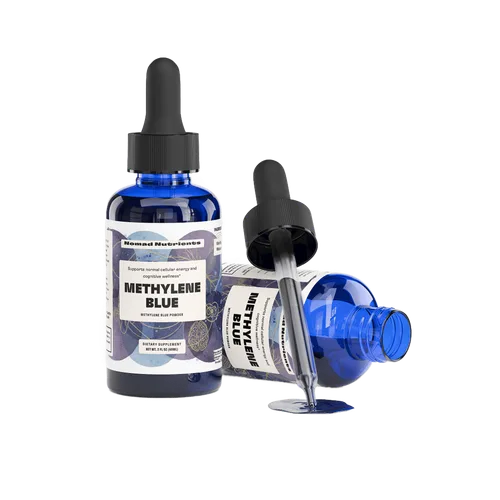
This is the section that matters most for methylene blue specifically, because the safety profile is more complex than most supplements and the interaction risks are real.
MAO inhibition: Low-dose methylene blue's MAO inhibitory activity is generally mild and unlikely to cause issues in isolation. However, combined with serotonergic compounds — SSRIs, SNRIs, tricyclic antidepressants, other MAO inhibitors, or even high-dose 5-HTP or St. John's Wort — there is a documented risk of serotonin syndrome: a potentially serious condition characterized by agitation, confusion, rapid heart rate, high blood pressure, and in severe cases, seizure or death.
This is not a theoretical concern. Multiple case reports document serotonin syndrome in surgical patients who received IV methylene blue (used as a tissue marker) while on serotonergic medications. The interaction is real. Anyone on any serotonergic medication should not use methylene blue without explicit medical supervision.
G6PD deficiency: Glucose-6-phosphate dehydrogenase (G6PD) deficiency is a genetic condition affecting approximately 400 million people globally, more common in populations from malaria-endemic regions (Africa, South/Southeast Asia, Mediterranean). In G6PD-deficient individuals, methylene blue can paradoxically worsen rather than treat methemoglobinemia, and may trigger hemolytic anemia. G6PD status should be known before using methylene blue. Testing is a routine blood test.
Pharmaceutical grade only. This is non-negotiable. Methylene blue used in laboratory and industrial settings contains heavy metal impurities (particularly zinc, copper, arsenic) that are toxic at supplemental doses. Only USP pharmaceutical-grade methylene blue is appropriate for human consumption. The purity difference between lab-grade and pharmaceutical-grade is the difference between a functional supplement and heavy metal poisoning. This is the most important sourcing requirement in this entire journal series.
Photosensitivity: Methylene blue increases photosensitivity — sun exposure shortly after dosing can cause enhanced skin reactions. Dosing in the morning before significant sun exposure is the relevant practical consideration, particularly in high UV environments.