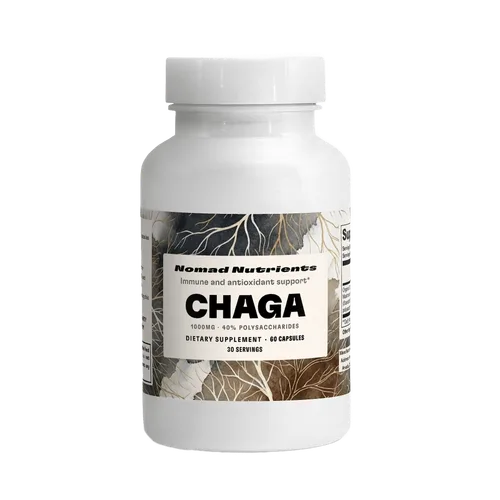
Chaga's exceptional antioxidant capacity comes from three distinct compound classes operating through different mechanisms. Understanding each separately matters because they're not redundant — they address different types of oxidative stress in different cellular compartments.
1. Melanin and the Free Radical Quench
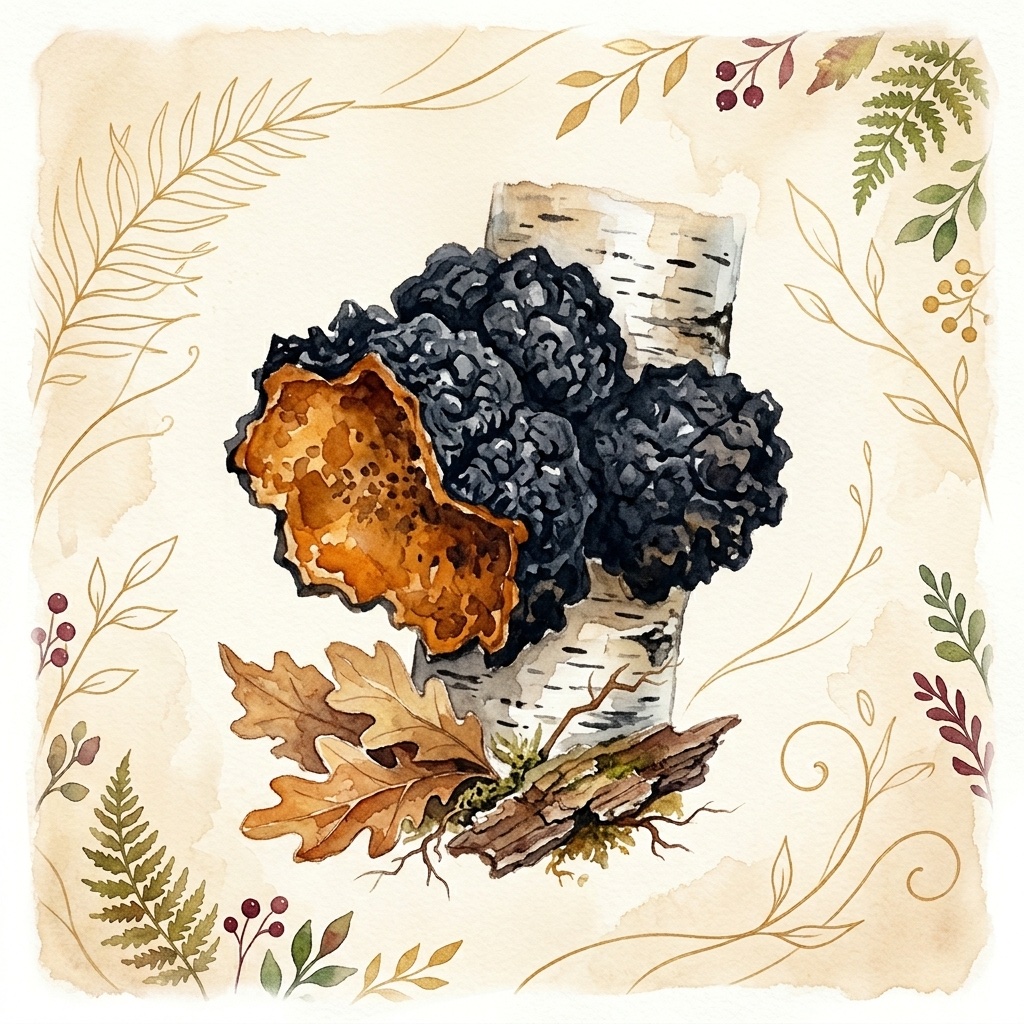
The black exterior of Chaga — the charcoal-like crust — is almost pure melanin, one of the highest natural concentrations of melanin found in any biological material. This isn't the same melanin as in human skin (eumelanin), but a complex polyphenolic polymer derived from oxidized polyphenols.
Melanin is an extraordinarily effective free radical scavenger. Its polymer structure contains multiple electron-donating phenolic hydroxyl groups distributed across a large molecular scaffold — it can absorb and neutralize large numbers of reactive oxygen species (ROS) simultaneously, acting as a kind of molecular sponge for oxidative damage. This is the primary driver of Chaga's ORAC score and its capacity to quench free radicals in assay conditions.
The legitimate question is whether ingested melanin survives digestion and reaches systemic circulation in biologically active form. The answer is partial: melanin polymers are largely insoluble and may not absorb intact. However, lower-molecular-weight melanin precursors and degradation products do show absorption and systemic distribution, and the gut-level antioxidant activity (protecting intestinal epithelial cells from oxidative damage) is real regardless of systemic absorption.
2. Betulinic Acid: The Birch-Derived Triterpene
This is where the birch relationship becomes pharmacologically significant. Chaga concentrates betulin from birch bark and converts it enzymatically to betulinic acid — a pentacyclic triterpene with its own distinct mechanisms well beyond simple antioxidant activity.
Betulinic acid has been extensively studied for its effects on mitochondrial apoptosis pathways — it appears to selectively trigger programmed cell death in certain abnormal cell types while leaving healthy cells unaffected, which is why it has attracted significant attention in oncology research. This is a different mechanism from its antioxidant activity and operates at the level of mitochondrial membrane permeability and cytochrome c release.
For non-oncological applications, betulinic acid shows meaningful anti-inflammatory activity — inhibiting NF-κB signaling (a master transcription factor for inflammatory gene expression) and reducing downstream cytokine production. It also demonstrates antiviral properties against several viral families, including inhibition of HIV-1 replication and influenza virus activity in cell models.
Critically: betulinic acid is fat-soluble. It requires alcohol extraction or a fat-containing medium to be captured and absorbed effectively. A hot-water Chaga tea — the traditional preparation — captures the water-soluble polysaccharides and some melanin fractions but misses the betulinic acid almost entirely. This is the single most important practical point in this piece.
3. Superoxide Dismutase: Enzymatic Antioxidant Defense
Superoxide dismutase (SOD) is a different category of antioxidant altogether — not a molecule that directly scavenges free radicals, but an enzyme that catalyzes their dismutation. Specifically, SOD converts superoxide radicals (O₂⁻) into hydrogen peroxide and oxygen — neutralizing one of the most reactive and damaging ROS produced during normal cellular metabolism.
Superoxide is generated continuously in the mitochondrial electron transport chain as a byproduct of ATP synthesis. Your body produces endogenous SOD (there are three mammalian isoforms: Cu/Zn-SOD, Mn-SOD, and extracellular SOD) specifically to manage this constant superoxide production. The efficiency of SOD activity is a significant determinant of mitochondrial health and cellular aging rate.
Chaga contains measurable quantities of SOD — some analyses have found Chaga among the highest natural food sources of SOD activity. The biological question is again absorption: SOD is a protein enzyme, and proteins are hydrolyzed in the GI tract before absorption. Whether intact SOD enzyme survives digestion and enters circulation is unlikely. However, the constituent amino acids and copper/zinc/manganese cofactors that support the body's own SOD synthesis do absorb and contribute to endogenous SOD production.
Additionally, some of Chaga's polyphenolic compounds show SOD-mimetic activity — they replicate SOD's electron transfer chemistry without being the enzyme itself, and these smaller molecules have better prospects for absorption and systemic distribution than the enzyme.