
7 min read · Filed under: Foundations, Nootropics, Daily Habits
Coffee is the most widely consumed psychoactive substance on Earth, and most people understand approximately 10% of what it does. Mushroom coffee modifies what coffee does at the pharmacological level — adding compounds that address caffeine's liabilities while preserving its benefits. Understanding the comparison requires understanding the mechanisms of both.
What Regular Coffee Does: The Full Pharmacology
Caffeine's primary mechanism is adenosine receptor antagonism. Adenosine is a neurotransmitter that accumulates during waking hours and promotes sleepiness by binding to A1 and A2A receptors. Caffeine's molecular structure is similar enough to adenosine to occupy these receptors without activating them — blocking the sleep signal. You feel alert because your brain can't detect its own tiredness. This is pharmacological deception, not energy production. Caffeine doesn't generate ATP or enhance mitochondrial output. It blocks the signal that you're running low.
The downstream effects compound the problem. Caffeine triggers cortisol release from the adrenal glands (activating the HPA stress axis), increases catecholamines (adrenaline and noradrenaline, narrowing the window between "focused" and "anxious"), and — critically — builds tolerance through receptor upregulation. Within 7–14 days of daily use, adenosine receptor density increases. Your brain grows more receptors to compensate for the ones caffeine is blocking. After a few months, your morning coffee doesn't make you alert — it makes you baseline. You're supplementing to reach the level you'd be at naturally without caffeine dependency.
Caffeine metabolism also generates reactive oxygen species. This low-grade oxidative burden, accumulated over years of daily consumption, contributes to cellular aging in caffeine-dependent tissues. The net oxidative cost of a daily coffee habit is small per cup but compounds over decades.
What Mushroom Coffee Adds: Three Distinct Compound Classes
Mushroom coffee combines reduced-dose caffeine (typically 50–80mg per serving, versus 95–200mg in standard coffee) with bioactive compounds from functional mushrooms. The pharmacological result isn't "less coffee." It's a different compound profile acting on different systems.
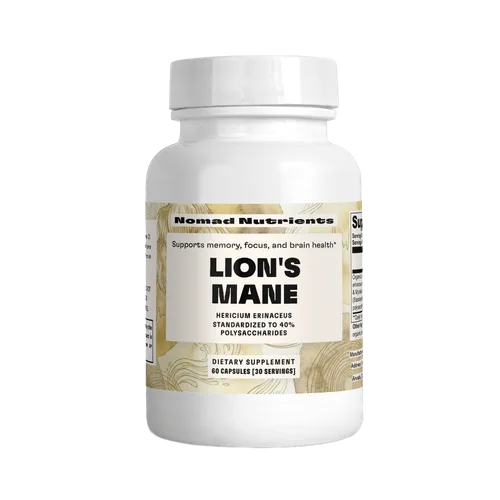
Lion's Mane (Hericium erinaceus) — Structural Neuroprotection
Lion's mane contains two unique compound classes: hericenones (found in the fruiting body) and erinacines (found in the mycelium). Both cross the blood-brain barrier and stimulate Nerve Growth Factor (NGF) synthesis in the hippocampus and cortex. NGF is the protein responsible for neuron maintenance, axonal growth, myelination, and synaptic plasticity.
This is the opposite approach to caffeine. Where caffeine blocks a tiredness signal (short-term mask), lion's mane supports the structural health of the neurons themselves (long-term foundation). The cognitive effects are subtle and cumulative — improved clarity, smoother recall, better word retrieval — rather than the acute spike-crash pattern of stimulants. Effects typically become noticeable around the 4-week mark of daily use as NGF-mediated neuronal remodeling progresses.
Chaga (Inonotus obliquus) — Antioxidant Offset
Chaga has one of the highest ORAC (oxygen radical absorbance capacity) values measured in any natural substance. Its primary actives — betulinic acid, inotodiol, and melanin complexes — scavenge the specific ROS classes that caffeine metabolism generates. In the context of a caffeine-containing beverage, chaga addresses caffeine's oxidative liability directly. The combination creates a net-neutral or net-positive oxidative balance per serving, compared to the net-negative balance of regular coffee.
The beta-glucan content of chaga additionally modulates immune function through Dectin-1 receptor binding on innate immune cells. This isn't immune stimulation — it's immune training. Beta-glucans improve pathogen recognition efficiency without increasing inflammatory baseline. A daily mushroom coffee delivers a microdose of immune modulation that accumulates over weeks.
Reduced Caffeine Dose — Pharmacokinetic Advantage
The 50–80mg caffeine dose in mushroom coffee isn't just "less caffeine." It changes the pharmacokinetic profile. Lower peak plasma concentration means less cortisol trigger, less catecholamine surge, and a wider therapeutic window between alertness and anxiety. Tolerance buildup is slower because adenosine receptor upregulation is dose-dependent — less blockade per day means less compensatory receptor growth. The reduced-dose caffeine combined with L-theanine (present in many mushroom coffee formulations) produces alpha brain wave promotion alongside the alertness, creating focused calm rather than wired alertness.
The Product Comparison
The single-origin instant mushroom coffee combines Arabica coffee with lion's mane and chaga — the simplest entry point. It tastes like coffee (because it is coffee), dissolves instantly, and delivers the core functional compounds alongside moderate caffeine. This is the transition product for people currently drinking regular coffee who want to switch without changing their ritual.
Vitality mushroom coffee expands the mushroom profile beyond lion's mane and chaga to include a broader functional blend with Arabica coffee. The wider mushroom spectrum provides more diverse beta-glucan profiles (different mushroom species produce structurally distinct beta-glucans that activate different immune receptor subtypes) and a broader range of triterpenes, polysaccharides, and adaptogenic compounds.
Date pine chaga cacao replaces coffee entirely with a cacao-based blend containing chaga, date, and pine nut. Zero caffeine, full adaptogenic and antioxidant support. This is the evening alternative — the warm beverage ritual without any adenosine receptor interference. For people who've decided to eliminate caffeine entirely but want to keep the daily cup ritual, this is the format that preserves the habit while replacing the pharmacology.
The Transition Strategy
Switching cold-turkey from three cups of regular coffee to mushroom coffee invites 2–7 days of caffeine withdrawal: headaches, fatigue, irritability. A taper works better.
Week 1: replace your second or third cup with mushroom coffee. Keep your first morning cup regular. Week 2: replace your first cup with mushroom coffee. Week 3: all mushroom coffee. Your total caffeine intake is now 50–80mg per serving versus 95–200mg, and you're receiving lion's mane NGF support, chaga antioxidant offset, and beta-glucan immune modulation with every cup. Week 4 and beyond: notice what changes. Less jitter, fewer afternoon crashes, more consistent energy. The lion's mane cognitive effects are cumulative and typically become noticeable around this mark.
The Bottom Line
Regular coffee borrows from tomorrow's energy by blocking today's tiredness signal. Mushroom coffee provides moderate stimulation while investing in long-term neural health (NGF), offsetting caffeine's oxidative cost (chaga), and training immune function (beta-glucans). One depletes a system over time. The other supports it.
The question isn't whether mushroom coffee is "better" in some abstract sense. It's whether you want your daily caffeine habit to be a net positive or a net neutral for your brain and immune system over the next decade of daily cups.