
8 min read · Filed under: Foundations, Metabolic Health, Cycling
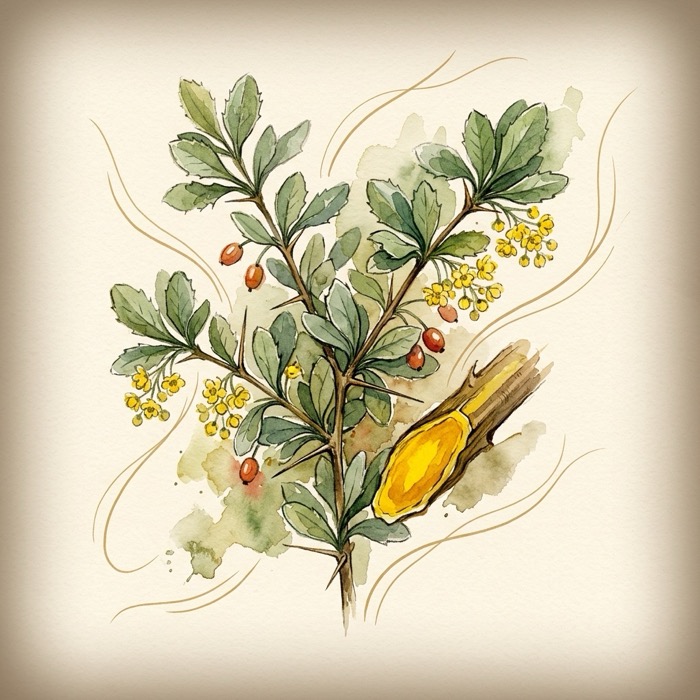
Berberine has been called "nature's metformin," which is both the most helpful and most misleading comparison in supplement marketing. Helpful because the primary mechanism — AMPK activation leading to improved glucose uptake — genuinely parallels metformin's. Misleading because it glosses over the fundamental problem with berberine as an oral supplement: almost none of it reaches your bloodstream.
Roughly 5% of an oral dose survives first-pass metabolism to enter systemic circulation. And yet it works. Understanding why it works despite barely being absorbed is the key to understanding how to use it — and which formulation to buy.
The Mechanism That Earns the Metformin Comparison
AMP-activated protein kinase (AMPK) is a cellular energy sensor — and for once the popular simplification is accurate. AMPK monitors the AMP-to-ATP ratio inside cells. When energy is depleted, AMPK activates and triggers a cascade of metabolic adjustments: it increases glucose uptake by translocating GLUT4 transporters to the cell surface, enhances fatty acid oxidation, stimulates mitochondrial biogenesis, and inhibits energy-consuming processes like lipogenesis and gluconeogenesis.
Berberine activates AMPK, though the exact mechanism is debated. The leading hypothesis is that berberine inhibits Complex I of the mitochondrial electron transport chain, mildly reducing ATP production and raising the AMP-to-ATP ratio. AMPK detects this shift and activates. The downstream result: cells pull glucose out of the blood more efficiently, and the liver reduces its glucose output.
This is why berberine has demonstrated clinically significant effects on fasting blood glucose and HbA1c in multiple trials of type 2 diabetic patients. A frequently cited 2008 study by Yin et al. found that 1,500 mg daily of berberine reduced HbA1c by 2% over three months — comparable to metformin in the same study. Subsequent meta-analyses have confirmed moderate glucose-lowering effects, though with high variability between trials.
The Bioavailability Problem — and Why It Might Not Be a Problem
The 5% bioavailability number isn't an approximation. It's been measured repeatedly in pharmacokinetic studies. Berberine faces three overlapping barriers.
First: intestinal P-glycoprotein (P-gp) efflux. P-gp is a membrane pump in the gut wall that actively expels berberine back into the intestinal lumen before it can be absorbed. Your gut treats berberine as a xenobiotic and ejects it.
Second: extensive first-pass hepatic metabolism. The fraction that does cross the gut wall is heavily metabolized by CYP2D6 and CYP3A4 in the liver, converting berberine to less active metabolites before it reaches systemic circulation.
Third: rapid biliary excretion. Berberine that survives hepatic metabolism is efficiently excreted back into the bile.
From a 500 mg oral dose, roughly 25 mg reaches your blood. This creates an obvious problem for applications requiring systemic AMPK activation. It also explains the high doses used in clinical trials — 1,000 to 1,500 mg daily, divided to maximize the fraction that slips through.
But here's the part most berberine content misses: the gut may be the primary site of action, not an obstacle to overcome. Berberine profoundly alters the gut microbiome. It selectively inhibits certain bacterial species while promoting others — particularly Akkermansia muciniphila, a species strongly associated with metabolic health. These microbiome shifts reduce secondary bile acids that promote hepatic gluconeogenesis and improve production of short-chain fatty acids that enhance insulin sensitivity.
Furthermore, gut bacteria metabolize berberine into dihydroberberine, which is more lipophilic and absorbs roughly five times more efficiently than the parent compound. The microbiome is converting berberine into its own bioavailability-enhanced form.
The gut isn't just a barrier. It may be the primary therapeutic site.
Formulation Strategies That Actually Matter
Understanding the bioavailability problem has spawned several approaches, and the differences between them are significant.
Dihydroberberine (dhBBR) supplements skip the gut conversion step, providing the more absorbable metabolite directly. Early evidence suggests 100 to 200 mg of dhBBR produces equivalent systemic effects to 500 mg of standard berberine.
Berberine phytosome — berberine complexed with phospholipids — improves gut absorption by presenting the alkaloid in a lipid-compatible matrix. Pharmacokinetic data suggests roughly two to three-fold improved absorption.
Piperine co-administration inhibits P-gp efflux and CYP3A4 metabolism, reducing both primary barriers. Crude but measurably effective.
The practical decision: if your goal is systemic AMPK activation (glucose management, metabolic support), dhBBR or phytosome at a reduced dose is preferable to high-dose standard berberine. If your goal includes gut microbiome modulation, standard berberine at traditional doses (500 mg two to three times daily) may be more appropriate precisely because it stays in the gut longer.
The Drug Interaction Profile You Cannot Ignore
Berberine inhibits CYP2D6 and CYP3A4 — the same liver enzymes responsible for metabolizing a wide range of pharmaceuticals, including many statins, antidepressants, antihypertensives, and immunosuppressants. If you're on any prescription medication, drug interaction screening is mandatory before adding berberine.
Berberine can cause hypoglycemia in combination with diabetes medications — particularly sulfonylureas and insulin. It should not be used alongside metformin without medical supervision, despite the superficial appeal of combining two AMPK activators.
GI side effects (cramping, diarrhea, constipation) are common initially and typically resolve within the first week as the microbiome adjusts. Starting at 250 to 500 mg daily and titrating up reduces the incidence.
Dosage and Cycling
Standard: 500 mg two to three times daily with meals for standard berberine. Reduced doses for enhanced formulations per the manufacturer's guidance.
Long-term safety data beyond 12 to 16 weeks is limited. Given the potency of its metabolic effects, cycling (eight weeks on, two to four weeks off) is a prudent approach for healthy individuals using berberine for metabolic optimization rather than therapeutic glucose management under medical supervision.
Curcumin anti-inflammatory + 10-mushroom immune + 92 trace minerals = Immunity
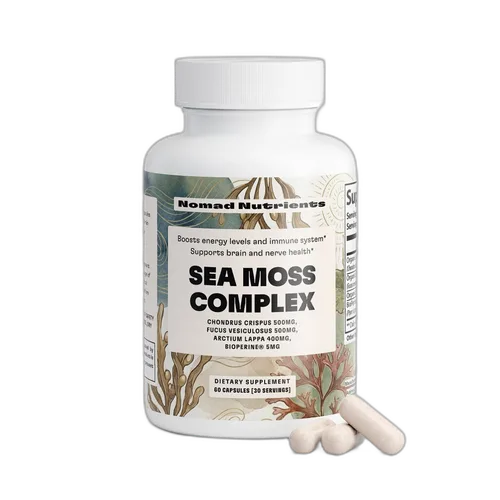
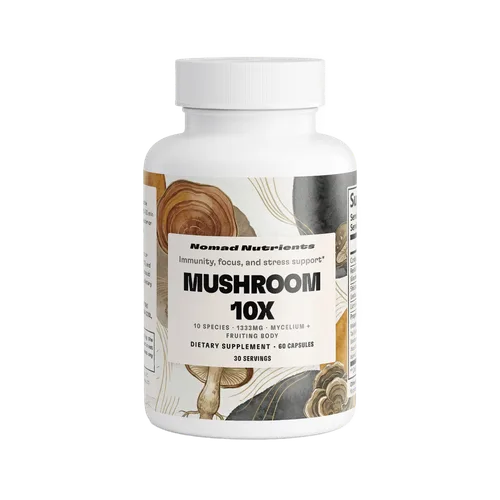
Turmeric Gummies target inflammation daily. Mushroom 10X delivers broad-spectrum immune training, rotating with Chaga during off-periods. Sea Moss provides the mineral foundation.
The Honest Frame
Berberine is the metabolic regulation tool in the stack. For people eating across time zones, managing variable meal timing, and dealing with the metabolic consequences of irregular schedules — it helps stabilize blood glucose and insulin sensitivity through mechanisms that are well-characterized and clinically validated.
The bioavailability story is more interesting than the marketing suggests. The drug interaction profile is more serious than the marketing admits. Choose your formulation intentionally, respect the interaction list, and cycle it if you're not under medical supervision. The mechanism earns its place — but only if you use it with the specificity it demands.
References
- Yin J, et al. "Efficacy of berberine in patients with type 2 diabetes mellitus." Metabolism, 2008.
- Zhang Y, et al. "Treatment of type 2 diabetes and dyslipidemia with the natural plant alkaloid berberine." Journal of Clinical Endocrinology and Metabolism, 2008.
- Feng R, et al. "Transforming berberine into its intestine-absorbable form by the gut microbiota." Scientific Reports, 2015.
- Habtemariam S. "Berberine pharmacology and the gut microbiota: a hidden therapeutic link." Pharmacological Research, 2020.
- Cicero AF, et al. "Berberine and its role in chronic disease." Advances in Experimental Medicine and Biology, 2019.