arachidonic-aciddha Β· epaomega-3resolvins

Omega-3: Why DHA and EPA Are Not the Same Supplement

Nomad Nutrients Editorialβ€’March 17, 2026

8 min read Β· Filed under: Foundations, Recovery, Anti-Inflammatory

Omega-3 is the supplement everyone thinks they understand. Take fish oil, reduce inflammation, protect the heart. The broad strokes are correct. The problem is that "omega-3" is a category, not a compound, and the two molecules inside that category β€” DHA and EPA β€” do fundamentally different things in your body. Conflating them has led to decades of confused dosing, mismatched expectations, and clinical trials that failed because they used the wrong ratio for the outcome they were measuring.

DHA is a structural molecule. EPA is a signaling molecule. Once you internalize that distinction, everything else about omega-3 supplementation makes sense.

DHA: The Membrane Architect

Docosahexaenoic acid (DHA) is a 22-carbon polyunsaturated fatty acid, and it is the single most abundant fatty acid in the human brain. It comprises roughly 40% of the polyunsaturated fatty acids in neuronal membranes and is concentrated at the synaptic terminals and retinal photoreceptors β€” the two sites in your body where signal transduction speed matters most.

DHA doesn't sit passively in the membrane. Its extreme unsaturation β€” six double bonds along the carbon chain β€” creates kinks in the molecule that prevent tight packing. When DHA is incorporated into the phospholipid bilayer, it increases membrane fluidity. This fluidity is not a metaphor. It's a measurable biophysical property that directly determines how quickly receptors can move laterally across the membrane surface, how efficiently ion channels open and close, and how rapidly vesicles fuse during neurotransmitter release.

A neuron with adequate DHA in its membranes transmits signals faster and more reliably than one with depleted DHA. Studies in DHA-deficient animal models show impaired long-term potentiation (the cellular mechanism of learning), reduced hippocampal neurogenesis, and measurable cognitive deficits that reverse when DHA is restored.

EPA: The Resolution Specialist

Eicosapentaenoic acid (EPA) is a 20-carbon omega-3 that doesn't accumulate in membranes the way DHA does. Instead, EPA serves as a substrate for enzymatic conversion into specialized pro-resolving mediators (SPMs) β€” specifically resolvins and protectins.

This matters because inflammation is not a single event with an on-off switch. It's a two-phase process: initiation and resolution. Your body initiates inflammation through prostaglandins and leukotrienes (derived primarily from omega-6 arachidonic acid). It resolves inflammation through resolvins and protectins (derived primarily from EPA and DHA). Both phases are active, energy-requiring processes. Resolution doesn't happen by default when the inflammatory signal stops β€” it requires its own dedicated molecular machinery.

When EPA levels are insufficient, initiation proceeds normally but resolution stalls. Inflammation becomes self-perpetuating β€” not because the trigger persists, but because the off-switch was never built. This is the mechanism behind chronic low-grade inflammation, and it's why omega-3 supplementation may support outcomes related to joint pain to depression to cardiovascular disease.

Dha Epa Functional Split
Click to expand
DHA vs. EPA: Functional SplitTwo omega-3 fatty acids with distinct physiological rolesDHA β€” Docosahexaenoic Acid22-carbon chain Β· Structural omega-3EPA β€” Eicosapentaenoic Acid20-carbon chain Β· Functional omega-3Neuronal membranesMaintains membrane fluidity& synaptic plasticityAnti-inflammatory signalingConverts to Series-3 prostaglandinsβ†’ counters AA inflammatory cascadeVisual system50% of retinal photoreceptormembrane lipid contentMood regulationStrongest omega-3 evidencefor depression & anxietyNeuroplasticitySupports BDNF expression& hippocampal neurogenesisCardiovascular protection↓ Triglycerides, platelet aggregation& arterial inflammationFetal CNS developmentCritical for infant brain &visual system formationExercise recoveryResolvin/protectin pathwayattenuates DOMS & accelerates repairBoth required. Mood/inflammation: target EPA:DHA β‰₯ 1.5:1. Cognitive/structural: emphasize DHA.

The Ratio Problem Most People Don't Know They Have

EPA doesn't operate in a vacuum. It competes directly with arachidonic acid (AA, an omega-6 fatty acid) for access to the same enzymes β€” cyclooxygenase (COX) and lipoxygenase (LOX). When AA occupies these enzymes, the output is pro-inflammatory prostaglandins and leukotrienes. When EPA occupies them, the output is anti-inflammatory resolvins.

The ratio of omega-6 to omega-3 in your diet determines who wins this enzymatic competition. Ancestral human diets are estimated to have contained omega-6 and omega-3 in roughly a 1:1 to 4:1 ratio. Modern diets, driven by seed oils and grain-fed animal products, push this ratio to 15:1 or 20:1. At those levels, arachidonic acid dominates the COX/LOX pathway, EPA barely gets a seat at the table, and the inflammatory resolution system runs at a fraction of its capacity.

This is why supplementing omega-3 without addressing omega-6 intake produces underwhelming results for many people. You're adding substrate to an enzymatic competition that the other side is winning by an order of magnitude.

Omega6 Ratio Inflammation
Click to expand
Omega-6/Omega-3 Enzymatic CompetitionDelta-6-desaturase is the rate-limiting enzyme both pathways shareΞ”6-Desaturase(shared bottleneck)Linoleic Acid (LA)Omega-6 Β· from seed oilsWestern diet: 15–20Γ— excessALA β†’ EPAOmega-3 Β· fish, flax, walnutsOptimal: 2–3g EPA/DHA dailyArachidonic Acid (AA)β†’ Series-2 prostaglandinsβ†’ Thromboxane A2β†’ Pro-inflammatory cascadeEPA β†’ DHAβ†’ Resolvins & Protectinsβ†’ Series-3 prostaglandinsβ†’ Anti-inflammatory resolutionWestern15–20 : 1Ο‰6 : Ο‰3Optimal≀ 4 : 1Ο‰6 : Ο‰3← Competition for enzyme →↑ Chronic inflammation, CVD risk↓ Inflammation, ↑ resolution

What the Research Actually Shows When You Separate the Molecules

The omega-3 literature is enormous and, at first glance, contradictory. The pattern becomes clear when you match the specific molecule to the specific outcome.

Depression trials consistently favor EPA-dominant formulations over DHA-dominant ones β€” aligning with the SPM-mediated neuroinflammation resolution hypothesis. Cognitive trials favor DHA, consistent with its structural role in neuronal membranes.

The VITAL trial (2019), one of the largest omega-3 RCTs ever conducted, found no significant reduction in major cardiovascular events from 840 mg combined EPA/DHA daily β€” but subgroup analysis revealed a significant 28% reduction in heart attack specifically, and stronger effects in participants with low baseline fish consumption. The REDUCE-IT trial (2018) used 4 grams of pure EPA daily and found a 25% relative risk reduction in cardiovascular events β€” a dramatically larger effect than any mixed EPA/DHA study had produced.

The pattern is consistent: match the molecule to the outcome and the effects are clear. Lump them together at generic doses and the signal dilutes.

Sourcing: Not All Fish Oil Is Fish Oil

Triglyceride-form fish oil has roughly 70% greater bioavailability than ethyl ester form. Re-esterified triglycerides (rTG) are the premium format β€” molecularly distilled, concentrated, and in the natural triglyceride configuration. Ethyl esters are cheaper but require additional enzymatic processing in your gut.

Algal oil is the only vegan source of preformed DHA. Flaxseed and chia provide alpha-linolenic acid (ALA), an 18-carbon omega-3 that requires conversion to EPA and DHA β€” a process that operates at roughly 5 to 10% efficiency in humans. ALA is not a reliable substitute for direct EPA/DHA supplementation.

Quality markers to look for: third-party testing for oxidation (TOTOX value), heavy metal content (mercury, PCBs), and actual EPA/DHA content per serving rather than total fish oil volume. The difference between what's on the front of the label and what's on the back is often substantial.

Dosage by Goal

For cognitive and neurological support: prioritize DHA. Target 1,000 to 2,000 mg DHA daily.

For inflammation resolution, mood support, and cardiovascular health: prioritize EPA. Target 1,500 to 2,000 mg EPA daily.

For general maintenance: at minimum, 500 mg EPA and 500 mg DHA daily. This is a floor, not an optimum.

Take omega-3 with a meal containing dietary fat. They're fat-soluble, and absorption increases substantially when consumed alongside other lipids.

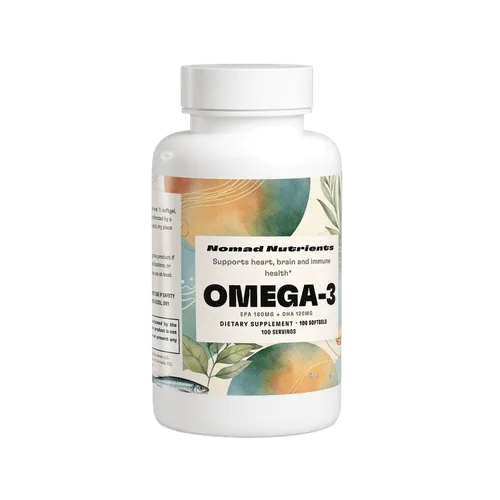
Each softgel delivers 180mg EPA and 120mg DHA (300mg combined). At the general maintenance floor of 500mg each, that's 3 softgels for EPA coverage and 5 for DHA β€” take with a fat-containing meal for best absorption.

Omega-3 EPA 180mg + DHA 120mg
Featured in this article

Omega-3 EPA 180mg + DHA 120mg

$20.93$27.90Stack price
Add to Stack
Focus StackSave $23.42/mo

NGF + nootropics + clean energy = Three-pathway focus

Mental clarity and concentration via three distinct biochemical pathways.

$70.27$93.70/month
Build Your StackFree shipping included

The Honest Frame

Omega-3 is infrastructure, not intervention. It doesn't produce a feeling. It maintains the membrane fluidity that makes your neurons fast, and it builds the molecular machinery that resolves the inflammation your lifestyle creates. The question isn't whether to supplement β€” it's whether you're using the right molecule for the right goal, and whether your omega-6 intake is undermining the investment.

For people moving between countries, eating inconsistently, and generating chronic low-grade inflammation through travel stress and schedule variability β€” omega-3 at adequate doses is one of the least negotiable foundations available.

References

  1. Swanson D, et al. "Omega-3 fatty acids EPA and DHA: health benefits throughout life." Advances in Nutrition, 2012.
  2. Bhatt DL, et al. "Cardiovascular risk reduction with icosapent ethyl for hypertriglyceridemia." REDUCE-IT trial. New England Journal of Medicine, 2019.
  3. Manson JE, et al. "Marine n-3 fatty acids and prevention of cardiovascular disease and cancer." VITAL trial. New England Journal of Medicine, 2019.
  4. Serhan CN. "Pro-resolving lipid mediators are leads for resolution physiology." Nature, 2014.
  5. Sublette ME, et al. "Meta-analysis of the effects of eicosapentaenoic acid (EPA) in clinical trials in depression." Journal of Clinical Psychiatry, 2011.

Comments

Leave a Comment

Featured In This Article

Shop Related Products

Founder’s Story

Tanner, Chief Mushroom Officer

"Hi, I'm Tanner, Chief Mushroom Officer at Nomad Nutrients. I built this for people like meβ€”optimizers who want a flexible, all-in-one supplement stack without the hassle. Build yours, dial it in, and keep exploring."

β€” Tanner

Chief Mushroom Officer