The evidence-based protocol for melatonin use is straightforward and differs substantially from how most people use it:
Dose: 0.3–0.5mg. If this is unavailable as a standalone product, a 1mg dose can be cut or dissolved and diluted. The sleep aid aisle's standard offering starts at 3mg and often goes to 10mg — you are deliberately seeking the lowest available dose or a product specifically formulated at physiological range. Several quality sleep supplement brands now offer 0.3mg specifically; this is the form worth seeking out.
Timing: 30–60 minutes before intended sleep onset. Not when you decide you can't sleep — proactively, as part of a consistent pre-sleep routine.
Light environment: Melatonin supplementation is most effective when paired with reduced light exposure in the hour before bed. Blue-spectrum light (screens, overhead LED lighting) suppresses endogenous melatonin production via the retinohypothalamic pathway. Supplementing melatonin while staring at a bright screen partially negates the effect by simultaneously signaling "daytime" through the eyes while the pill signals "night" through blood levels. Amber lighting or blue-light blocking in the pre-sleep window is the complement, not a replacement.
Frequency: Melatonin is most appropriate for circadian disruption scenarios — jet lag, shift work, irregular schedules — or as a short-term intervention for establishing a sleep rhythm. Nightly use indefinitely is not the optimal protocol; the goal is to support the endogenous rhythm, not replace it. Using melatonin situationally rather than habitually preserves receptor sensitivity and keeps the circadian signal functional.
Combination with other sleep support: Melatonin addresses circadian timing and sleep onset. It does not address sleep architecture or the nervous system's ability to downregulate. Compounds that target those mechanisms — magnesium glycinate for GABAergic tone, reishi for nervous system quieting — are complementary rather than redundant. The complete sleep protocol addresses multiple layers: timing (melatonin), nervous system state (magnesium, reishi), and sleep pressure management (consistent wake time, morning light).
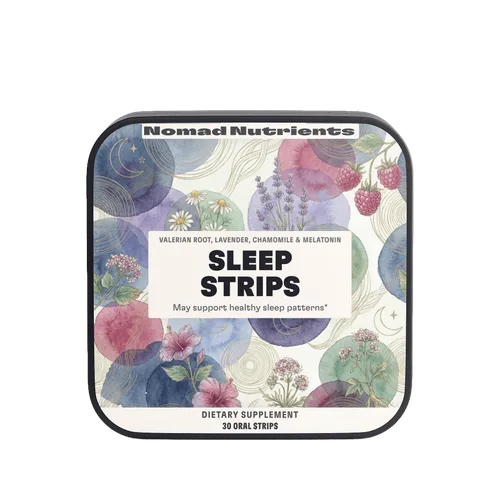
Our Sleep Strips deliver 1mg — at the upper end of the physiological window — and can be halved for a 0.5mg dose.