coenzyme-q10mitochondriaubiquinoneatpenergylongevity

CoQ10: The Electron Carrier Your Mitochondria Run Out of After 30

Nomad Nutrients EditorialApril 10, 2026

8 min read · Filed under: Energy, Longevity, Foundations

Every cell in your body runs on ATP. And the final, rate-limiting step in ATP production — the electron transport chain in your mitochondrial inner membrane — depends on a single molecule shuttling electrons between Complex I/II and Complex III. That molecule is Coenzyme Q10.

It's not a vitamin. It's not optional. It's a fundamental component of cellular energy production, and your body makes less of it every year after your early twenties. By the time you're 40, cardiac tissue CoQ10 levels have dropped by roughly 30%. By 80, they've dropped by more than half. This decline correlates directly with the age-related reduction in mitochondrial efficiency that underlies fatigue, reduced exercise capacity, and accelerated cellular aging.
The Electron Transport Chain: Where CoQ10 Lives

Mitochondrial ATP production occurs across five protein complexes embedded in the inner mitochondrial membrane. The first four (Complexes I through IV) form the electron transport chain (ETC), which creates a proton gradient that Complex V (ATP synthase) uses to drive ATP production.

CoQ10 — also called ubiquinone in its oxidized form — operates between Complexes I/II and Complex III. It's a mobile electron carrier: it accepts electrons from NADH (via Complex I) and FADH2 (via Complex II), becomes reduced to ubiquinol, then shuttles those electrons to Complex III. This transfer is coupled to proton pumping across the inner membrane, building the electrochemical gradient that powers ATP synthesis.

Without adequate CoQ10, this electron handoff stalls. Complexes I and II have nowhere to send their electrons. The proton gradient weakens. ATP production drops. And the electrons that can't move forward do something worse — they leak out and react with molecular oxygen to form superoxide radicals, the primary source of mitochondrial reactive oxygen species (ROS).

This creates a vicious cycle: CoQ10 deficiency simultaneously reduces energy production and increases oxidative damage to the very organelle responsible for energy production. Mitochondrial DNA, which lacks the protective histones and repair mechanisms of nuclear DNA, is particularly vulnerable. Damaged mitochondrial DNA impairs the transcription of ETC complex subunits, further degrading efficiency and increasing ROS — a self-amplifying loop that is central to the mitochondrial theory of aging.

Age-Related Decline: The Numbers

CoQ10 biosynthesis is a 17-step process that shares early pathway steps with cholesterol synthesis (the mevalonate pathway). Endogenous production peaks around age 20, plateaus through the mid-twenties, and begins a steady decline that accelerates after 40.

Tissue-specific data tells the story:

Heart muscle: CoQ10 concentration declines approximately 30% between ages 20 and 40, and 57% by age 77. The heart is the most metabolically active organ in the body — it produces and consumes more ATP per gram of tissue than any other organ. CoQ10 depletion here has direct functional consequences for cardiac output and exercise tolerance.

Skeletal muscle: Similar decline trajectory, manifesting as reduced exercise capacity, slower recovery, and increased susceptibility to exercise-induced oxidative damage.

Brain tissue: The brain consumes 20% of the body's oxygen despite representing only 2% of body mass. CoQ10 depletion in neural mitochondria contributes to the bioenergetic deficit observed in neurodegenerative conditions and age-related cognitive decline.

Skin: Epidermal CoQ10 levels decline with age and UV exposure. The skin's antioxidant defense and cellular energy for repair processes both depend on mitochondrial CoQ10 status.

The Statin Problem

Statins — HMG-CoA reductase inhibitors — are among the most prescribed medications in the world. They work by blocking the mevalonate pathway to reduce cholesterol synthesis. The problem is that CoQ10 synthesis shares this pathway. When you inhibit HMG-CoA reductase, you reduce cholesterol production as intended — but you also reduce CoQ10 production as an unintended consequence.

Clinical studies have documented 25-40% reductions in plasma CoQ10 levels in patients on statin therapy. This is the most widely accepted explanation for statin-associated myopathy — the muscle pain, weakness, and fatigue that affect 10-25% of statin users. The muscles are being asked to function with depleted mitochondrial electron carriers while simultaneously losing their antioxidant protection against the resulting ROS increase.

Multiple clinical guidelines now recommend CoQ10 supplementation for patients on statin therapy, though the practice remains inconsistently implemented. The biochemical rationale is straightforward: if you're pharmacologically blocking the pathway that produces CoQ10, you need to replace it exogenously.

Ubiquinone vs. Ubiquinol: The Form Matters

CoQ10 exists in two interconvertible forms: ubiquinone (oxidized) and ubiquinol (reduced). In the ETC, CoQ10 cycles between these forms — accepting electrons as ubiquinone, donating them as ubiquinol. Both forms are present in circulation and tissues.

Most traditional CoQ10 supplements contain ubiquinone. When ingested, ubiquinone must be reduced to ubiquinol in the gut and liver before it can function as an antioxidant or electron carrier. In healthy young adults, this conversion is efficient and ubiquinone supplementation is adequate.

However, the reductive capacity that converts ubiquinone to ubiquinol also declines with age — meaning that in the population most likely to be CoQ10-deficient (adults over 40), the ability to convert supplemental ubiquinone to its active reduced form is also compromised. This has led to the development of stabilized ubiquinol supplements, which bypass the conversion step entirely.

Pharmacokinetic studies show that ubiquinol achieves 3-4x higher plasma concentrations than equivalent doses of ubiquinone in older adults. In younger adults (under 30), the difference is smaller because endogenous reductive capacity is still robust. The practical takeaway: ubiquinone is fine if you're under 30; ubiquinol is the more reliable choice after 40.

Fat-Soluble Absorption: The Delivery Requirement

CoQ10 in both forms is highly lipophilic — it's designed to sit in a lipid bilayer membrane, not dissolve in water. Oral absorption depends entirely on micellar solubilization in the small intestine, which requires dietary fat.

Taking CoQ10 on an empty stomach reduces absorption by 40-60% compared to taking it with a fat-containing meal. This isn't a minor optimization — it's the difference between achieving therapeutic plasma levels and wasting most of the dose. The most effective absorption occurs with meals containing at least 10-15g of fat.

Some formulations address this with lipid-based delivery systems — soft gel capsules with medium-chain triglycerides (MCTs) or phospholipid carriers that create self-emulsifying systems in the gut. These formulations consistently show 2-3x higher bioavailability than dry powder capsules, independent of meal timing.

Clinical Applications and Dosage

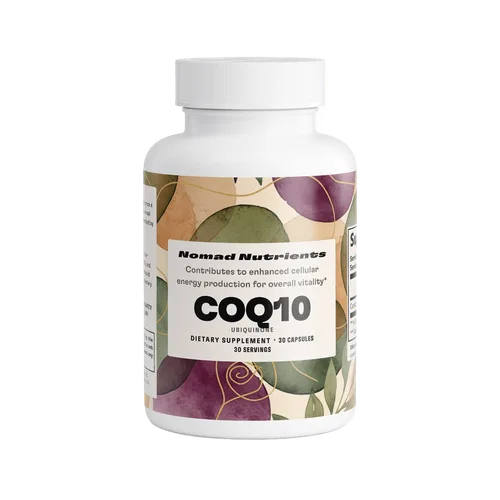
General supplementation (age-related decline): 100-200mg daily of ubiquinol, or 200-400mg daily of ubiquinone, taken with a fat-containing meal. This range is sufficient to restore plasma CoQ10 levels to youthful concentrations in most adults over 30.

Statin co-supplementation: 100-200mg daily, same guidelines. Multiple trials show reduction in statin-associated muscle symptoms and improvement in muscle function scores.

Cardiovascular support: The Q-SYMBIO trial — a randomized, double-blind, placebo-controlled study of 420 heart failure patients — showed that 300mg/day CoQ10 supplementation over two years reduced major adverse cardiac events by 43% and cardiovascular mortality by 42%. These are large effect sizes for a nutritional intervention in a well-designed trial.

Exercise performance: Doses of 100-300mg daily for 4-12 weeks have shown modest improvements in VO2 max, time to exhaustion, and post-exercise recovery markers in both trained and untrained individuals. Effects are more pronounced in older adults and those with lower baseline CoQ10 status.

Fertility: CoQ10 supplementation (200-600mg daily) has shown improvements in both male and female fertility parameters — sperm motility and morphology in men, oocyte quality and ovarian response in women undergoing IVF — consistent with the high metabolic demands of reproductive cells.

Onset: Plasma levels reach steady state in 2-3 weeks. Tissue saturation — particularly in cardiac and skeletal muscle — takes 4-12 weeks. Clinical effects on energy, exercise capacity, and muscle symptoms typically emerge at 4-8 weeks.

The Honest Frame

CoQ10 isn't a stimulant. It doesn't give you energy in the way caffeine does — by blocking adenosine receptors and activating the sympathetic nervous system. It operates at the most fundamental level of cellular energy production: ensuring the electron transport chain has the electron carriers it needs to produce ATP efficiently and cleanly.

The age-related decline is real, measurable, and functionally consequential. The statin-induced depletion is pharmacologically predictable and clinically documented. The supplementation response is dose-dependent and well-characterized across dozens of clinical trials.

If you're over 30, your mitochondria are running with a progressively depleted electron carrier pool. If you're on a statin, that depletion is accelerated. CoQ10 supplementation doesn't add a new capability — it restores a biochemical resource that your cells need and are increasingly unable to produce on their own. The mechanism is as fundamental as it gets: the molecule that carries electrons from one respiratory complex to the next, keeping the engine of cellular energy production running.


References

  1. Crane FL. "Biochemical functions of coenzyme Q10." Journal of the American College of Nutrition, 2001.
  2. Mortensen SA, et al. "The effect of coenzyme Q10 on morbidity and mortality in chronic heart failure: results from Q-SYMBIO." JACC Heart Failure, 2014.
  3. Langsjoen PH, Langsjoen AM. "Supplemental ubiquinol in patients with advanced congestive heart failure." BioFactors, 2008.
  4. Littarru GP, Tiano L. "Bioenergetic and antioxidant properties of coenzyme Q10: recent developments." Molecular Biotechnology, 2007.
  5. Caso G, et al. "Effect of coenzyme Q10 on myopathic symptoms in patients treated with statins." American Journal of Cardiology, 2007.
  6. Lopez-Lluch G, et al. "Is coenzyme Q a key factor in aging?" Mechanisms of Ageing and Development, 2010.

Mechanisms of Action

Electron Transport Chain
Click to expand
Electron Transport ChainCoQ10 shuttles electrons between Complex I/II and Complex III — a critical handoff pointInner Mitochondrial MembraneComplex INADH → NAD⁺e⁻ donatedComplex IIFADH₂ → FADe⁻ donatedCoQ10Electron ShuttleUbiquinone ↔ UbiquinolComplex IIICytochrome bc1Q cycleCyt CMobile carrierComplex IVO₂ → H₂OTerminal oxidaseATP SynthaseComplex VH⁺ gradient → ATPH⁺ pumped across membraneCoQ10 DeficitElectron LeakIncomplete shuttle transferROS ↑Superoxide radical damageDownstream Damage• mtDNA mutations• Lipid peroxidation • Protein oxidationCoQ10 is the only lipid-soluble antioxidant synthesized endogenouslyIt carries electrons from Complex I/II to Complex III and neutralizes free radicals at the membrane
Depletion Over Time
Click to expand
CoQ10 Depletion Over TimeNatural synthesis peaks at ~20 and declines steadily — statins accelerate depletion100%75%50%25%Tissue CoQ10 Level203040506070Age (years)Supplementation startsNatural declineStatin-induced depletionWith CoQ10 supplementationHeart tissue: highest CoQ10 demandDeclines ~57% by age 70Statin HMG-CoA Reductase InhibitionBlocks cholesterol AND CoQ10 synthesisSame mevalonate pathwayUbiquinol (reduced form) is preferred for adults 40+ due to declining conversion capacity from ubiquinone

Comments

Leave a Comment

Featured In This Article

Shop Related Products

Founder’s Story

Tanner, Chief Mushroom Officer

"Hi, I'm Tanner, Chief Mushroom Officer at Nomad Nutrients. I built this for people like me—optimizers who want a flexible, all-in-one supplement stack without the hassle. Build yours, dial it in, and keep exploring."

— Tanner

Chief Mushroom Officer